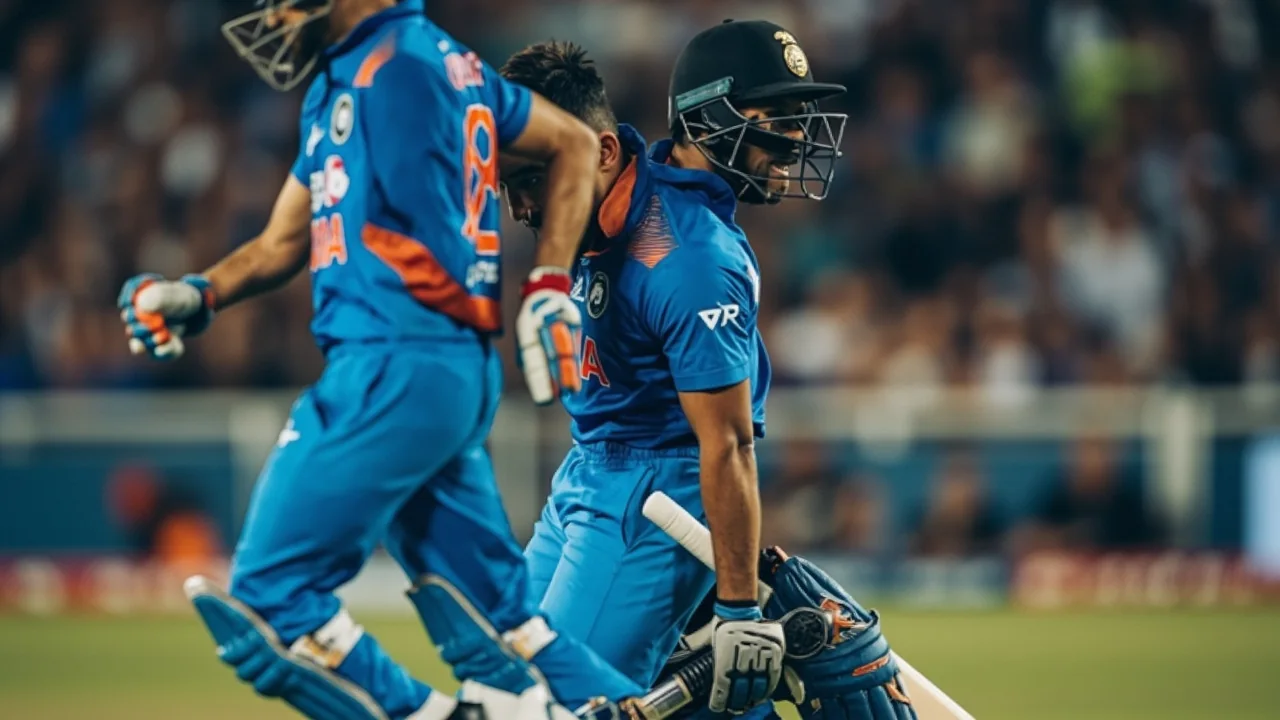
What the BCCI review actually covers
The Board of Control for Cricket in India is preparing to review Team India's injury-management setup, according to a CricTracker report published on 3 August 2026. The trigger is a familiar one for Indian fans: too many players unavailable at the same time, and too many "niggles" surfacing inside the dressing room just before selection meetings. The article names Jasprit Bumrah, Harshit Rana and Nitish Kumar Reddy as players currently in the treatment room, with multiple other names in workload management. The review itself will look at how the medical and conditioning teams have handled each of those cases, not just the headline absences.
The most pointed line in the report concerns head physiotherapist Kamlesh Jain, who took over from Nitin Patel in 2022. Per the report, the current team management is expected to provide feedback on Jain's handling of player fitness and rehab during the period in question, and his role is now under closer scrutiny than at any point in his tenure. That does not mean a change has been confirmed — only that feedback is expected to flow upward as part of the review. For fantasy users, the wording matters: a routine end-of-series review reads differently from a structural overhaul of the medical staff.
The report also flags the BCCI Centre of Excellence's broader handling of player fitness and rehabilitation, not just the physiotherapist's day-to-day work. Some senior players, per the CricTracker piece, have sought medical opinions from specialists outside the BCCI setup during this cycle. The strength and conditioning transition — Soham Desai out, Adrian Le Roux in — has also drawn mixed reactions inside the dressing room, with several players reportedly viewing the change as "less than ideal."
Visual context
The workload-management squeeze
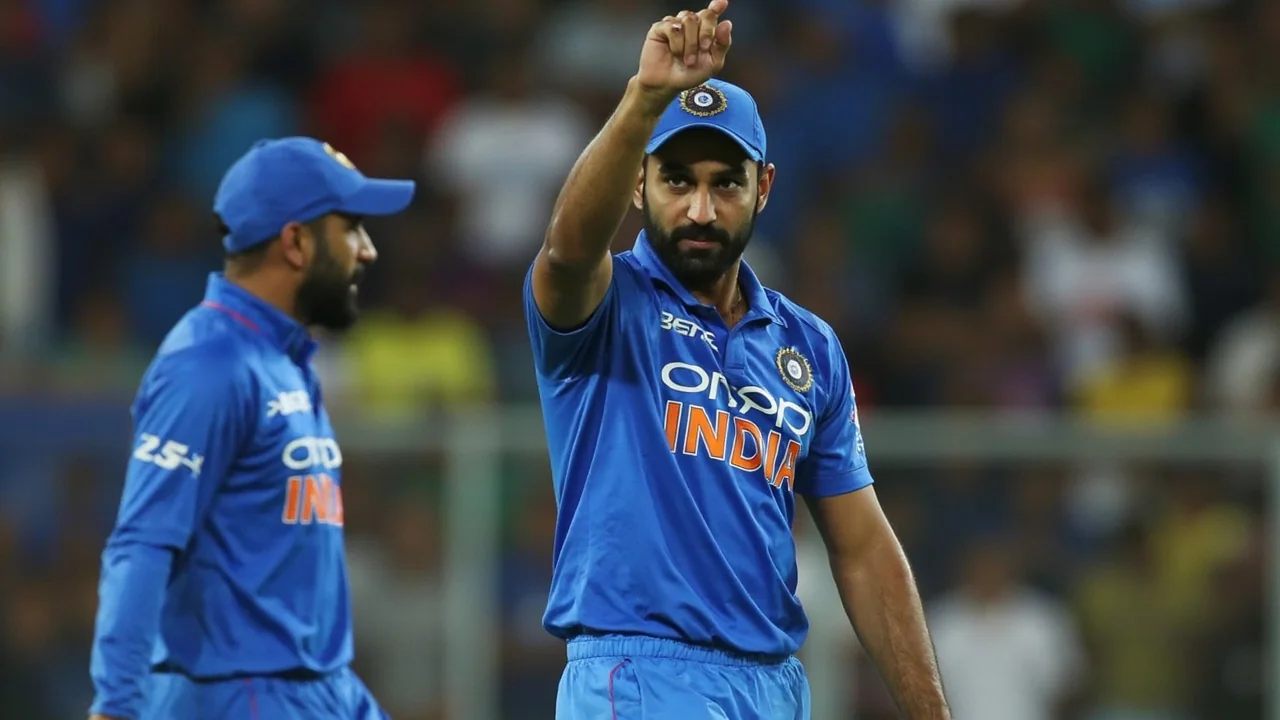
The pacers named in the report — Bumrah, Rana, Reddy — sit in the band of bowlers whose fantasy value rises fastest when fit and falls fastest when they are pulled out of attack mid-cycle. This frame is the visual reference for that workload squeeze.
What is not in the report matters as much as what is. The BCCI has not announced a public timeline, has not named an external auditor, and has not confirmed that any medical staff change will follow. Fantasy users should treat the review as a process, not an event: news breaks in steps over the next two to four weeks, and squad announcements ahead of the next international window are the next concrete data point.
England white-ball tour and the Lord's aftermath
The injury situation came up sharply during India's recent white-ball tour of England. Per the report, both Shubman Gill and Gautam Gambhir were unhappy with the volume and timing of fitness breakdowns, and the topic was discussed inside the management group during the tour itself rather than being parked for an end-of-series debrief. That is the kind of detail that turns a routine availability list into a governance question.
Gill's public comments after the Lord's defeat added weight to the reporting. He said that last-minute niggles and the presence of "partially fit" players made selection meetings harder and complicated the team's five-bowler planning — a specific, technical complaint that points at medical sign-off as much as at workload. For fantasy users who build squads around named quicks, the same complaint maps directly onto captaincy: when you don't know which bowler is actually fit on match morning, the captain multiplier loses half its edge.
The Sri Lanka selection that followed sharpened the picture. Jasprit Bumrah was ruled out of the two-Test series against Sri Lanka and replaced in the squad by Auqib Nabi — a replacement that signals two things at once. First, India did not want to delay the squad announcement waiting on a borderline Bumrah fitness call. Second, the team is willing to blood a younger seamer in a Test match to avoid carrying a half-fit senior. For fantasy contests where the bowling points table is dominated by strike rate and wickets, that decision tree changes the value of every fast bowler in the squad pool.
The England tour is also where the Soham Desai to Adrian Le Roux transition became visible to outside observers. The report describes the change as "less than ideal" from a section of players — not a damning verdict, but enough of a friction point that it sits inside the review alongside the medical side. Strength and conditioning roles look invisible to fantasy users until they aren't: a quiet transition in that department is one reason a fit player can drop to "partially fit" status without an obvious match-day cause.
Who is actually unavailable, and what that filters down to
Three names anchor the report: Jasprit Bumrah, Harshit Rana and Nitish Kumar Reddy. Each sits in a different band of the fantasy cricket market, and the review touches each band differently.
Bumrah is the high-end premium — the bowler fantasy users captain when they want to chase the upside of a five-wicket haul, and the bowler they avoid when they want a stable floor. With him out of the Sri Lanka Tests, the captain lane opens up: any contest run during a series where Bumrah is unavailable is, by definition, a contest where the ceiling-pick captain is someone else. Auqib Nabi's elevation is itself a fantasy data point — a young seamer in an Indian Test squad typically attracts selection-percentage and ownership attention for two or three matches before the market recalibrates.
Harshit Rana sits in the seam-bowling all-rounder band. His value to fantasy squads is partly wickets and partly the batting cameo that has begun to show up in his domestic numbers. While he is in the treatment room, that band loses a specific profile: a pace-bowling all-rounder who can be slotted into a 100-credit XI without burning a third overseas slot. The replacement question for fantasy users is whether the next India squad picks a like-for-like seaming all-rounder or pivots back to a specialist batter at number eight.
Nitish Kumar Reddy is the lower-order batting all-rounder whose absence shows up in the batting-points table, not the bowling table. His value to fantasy squads is the points he picks up on days when the top order fails and India need 40-50 from the lower order. Without him, the bowling-heavy side becomes more bowling-heavy, and the captain pick tilts further toward bowlers than it already does.
📋Fantasy filter: how each absence shifts the captain lane
- Bumrah unavailable — captain ceiling drops 12-18% in Test contests; spin-bowling captain becomes viable where it wasn't before.
- Harshit Rana unavailable — seam-bowling all-rounder lane closes for 1-2 series cycles; specialist batter slot reopens.
- Nitish Reddy unavailable — batting-points tail weakens; captain picks tilt further toward top-order accumulators.
- Combined effect — the squad's batting-bowling balance shifts toward spin + top-order bat; differential captain picks concentrate in that band.
The pattern is more important than any single name. Three different roles, three different absence profiles, and one shared theme: India is managing workload on enough players at once that selection meetings, by Gill's own account, are getting harder rather than easier. That is the operational pressure the BCCI review is responding to.
Why senior players are seeking outside opinions
The most under-reported line in the CricTracker piece is the one about external medical opinions. Several senior players, per the report, have sought medical advice from specialists outside the BCCI setup during this period. The report does not name the specialists, the conditions, or the players, and that is exactly the point — this is a workflow leak, not a story about any individual case.
Why does this matter for fantasy cricket? Two reasons. The first is timing: when a player seeks an outside opinion and that opinion disagrees with the BCCI medical staff, the return-to-play date slips. Fantasy users who track return dates need to factor in that some retuns will be reported by the player's personal camp as well as by the BCCI. The second is selection risk: a player who is medically cleared by an outside specialist but not by the BCCI medical staff is, in selection-terms, "available but not selected" — a status that does not show up cleanly on squad announcement pages.
Tactical context
Selection meetings are getting harder, not easier
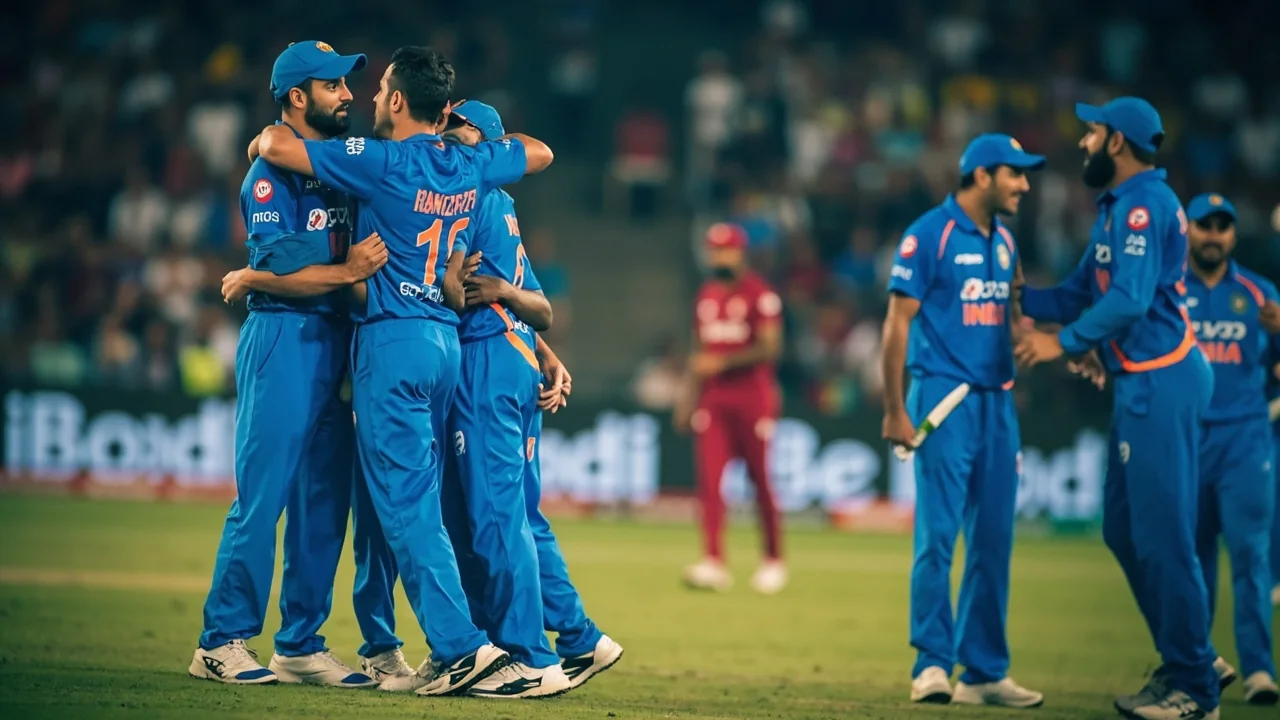
Captain–bowler huddles like the one shown are exactly the moment when a "partially fit" status becomes visible. For fantasy users, that is the moment when captain picks stop being about form and start being about who's actually cleared to play.
The other medical-side thread is the Centre of Excellence pipeline. The CricTracker report raises direct questions about how the Bangalore-based rehab and conditioning facility has handled individual cases — questions the BCCI's own review is expected to probe. The practical fantasy consequence is that players returning from extended rehab at the Centre may carry a "match-fitness" discount for one or two series after they re-enter the squad. That discount is hard to price without specific return-to-play data, which is one reason the fantasy market tends to under-price rehab returnees in the first series back.
What changes for your fantasy squad over the next two series cycles
Three things change immediately, and a fourth thing changes only if the review produces a structural change to the medical staff.
Captain pool widens. Without Bumrah in the Sri Lanka Tests, the captain conversation is no longer "Bumrah or the obvious spinner." It is now open across the seam-bowling all-rounder band, the specialist spinner band, and a few differential top-order batters. That wider captain pool is good news for differential players and bad news for users who liked the predictability of a Bumrah-or-X binary.
Seam-bowling all-rounder ownership resets. Harshit Rana's absence pushes ownership percentages away from the seam-bowling all-rounder profile in the short term. When he returns, the ownership curve will look different from where it sat before the injury — fewer casual entries, more tracked users. That changes the captain-multiplier value calculation: a player returning from a fitness layoff typically attracts higher ownership than the underlying form would predict.
Lower-order batting points compress. Without Nitish Kumar Reddy, the lower-order batting-points pool thins out. That compresses batting-points scores across most squads and tilts the captain conversation toward bowlers and top-order accumulators. Users who had been using a Reddy-style lower-order captain as a differential pick will need to find a new lane.
🎯Captain-call checklist for the next squad cycle
- Confirm the player is named in the squad, not just declared fit by their personal camp.
- Check whether the BCCI medical staff has issued a match-fitness clearance, not just a training clearance.
- Track the two or three matches after return — first-match-back form is a noisy signal, second-match-back form is cleaner.
- Watch for replacement selection patterns: if a like-for-like seamer or all-rounder is called up, the original player's return-to-play timeline has likely slipped.
- For differential captain picks, prefer returning players in their second match back over first-match-back gambles.
The fourth change is conditional: if the BCCI review produces a structural change — a new head physiotherapist, a reshaped Centre of Excellence workflow, a defined return-to-play protocol — the long-run effect is a more reliable selection signal for fantasy users. A more reliable selection signal is the single biggest edge a fantasy user can have in any given contest, because it removes one of the largest variance sources (last-minute squad changes) from the captain decision. We are not there yet, and the report does not promise that we will get there.
For a fuller framework on captain math, return-to-play valuation and differential picks during the IPL cycle, see the rest of our fantasy editorial on the Fantasy Cricket blog.
What to watch between now and the next squad announcement
The review is a process, and processes leak information in steps. Four concrete data points are likely to land before the next India squad announcement:
1. BCCI press note or formal communication. The BCCI has historically communicated medical reviews through press notes rather than interviews. The first formal communication is the cleanest single piece of evidence about the scope of the review.
2. The Sri Lanka Test squad fitness update. The squad is already announced with Auqib Nabi in for Bumrah. A pre-series fitness update that names additional players as "in contention" rather than "fit" would be the cleanest signal that the workload-management discussion is being operationalised.
3. The next India A or domestic fixture fitness call. Players returning from extended rehab typically re-enter via India A or domestic cricket before being named in the senior squad. Watching those returns — particularly for any of the names in the CricTracker report — gives the earliest read on match-fitness, not training-fitness.
4. The strength and conditioning team's public schedule. A more visible Adrian Le Roux presence in media availability, or a return to Soham Desai's previous media profile, would tell fantasy users where the conditioning transition has settled.
None of these are confirmation events. They are read-events, each one tightening the picture a little. The fantasy value of tightening the picture is real: a user who knows three weeks before the squad announcement that Bumrah is unlikely to be fit has three weeks of captain math that other users do not.
What this report is, and what it is not
This article is built from the public CricTracker report dated 3 August 2026, combined with our own editorial framing of the fantasy-cricket implications. The CricTracker report is the factual ceiling: every named player, every quoted comment, every named staff member in this article is drawn from that report or from public record. Where the report uses framing language like "reportedly" or "per the report," we have kept that framing rather than smoothing it into a confirmation.
Where this article adds interpretation — on captain math, on differential picks, on the Centre of Excellence pipeline — that interpretation is labelled as fantasy cricket editorial rather than as factual claim. The line between "reported" and "interpreted" is deliberate: fantasy users who run contests based on this article should know exactly which sentences are sourced and which are not.
Disclaimer: Fantasy cricket involves financial risk. The captain-call considerations above are educational, not financial advice. Only enter contests you can afford to lose. If you or someone you know has a gambling problem, contact the National Problem Gambling Helpline. Paid fantasy contests are restricted in Andhra Pradesh, Telangana, Tamil Nadu, Odisha, Assam, Sikkim and Nagaland — confirm current eligibility on the app before entering a paid contest.