Fantasy Cricket Fantasy Cricket guide, deep forest green editorial sports photography
Fantasy Cricket · Editorial Guide

Fantasy cricket is a skill game. Learn the framework before you play.

Fantasy cricket basics — salary cap, role split, captain multiplier, bankroll management and the worked examples from the 2025 IPL season. Built for the new player, audited by the editorial desk.

Fantasy Cricket salary cap strategy

Reference image

Salary Cap Strategy

A quick visual reference for the section above.

The fundamentals

What fantasy cricket is — and how Fantasy Cricket frames it.

Fantasy cricket is a game of skill in which you build a virtual team of eleven real players from a real match and earn points based on those players' actual on-field performance. On the apps covered by Fantasy Cricket, fantasy contests run alongside the regular contest structure — free practice, paid head-to-head, paid mega contest. The editorial framework on this site is built for the new player — the reader who wants to learn the math before committing cash, not for the hobbyist dream-team builder.

Across major platforms: pick eleven players, stay under the salary cap, meet the role split (1 wicketkeeper, 3-6 batters, 1-4 all-rounders, 3-6 bowlers), pick a captain (2x multiplier) and a vice-captain (1.5x multiplier), and submit before toss. Where Fantasy Cricket differs from the marketing-first apps is that we publish the math behind each lever — captaincy framework, salary-cap allocation logic, role-split tradeoffs — so you can audit our calls before you commit any money.

The fantasy market in India has grown sharply since IPL 2018. Total player spend in 2024 was around ₹6,500 crore across all operators. Fantasy Cricket is a small editorial project that covers the apps and the math, not an operator. Our editorial incentive is sharper because we cannot afford to publish a captain pick that underperforms — every claim we make is auditable against the published ball-by-ball feed and the operator's official rules.

The next eight sections cover: salary-cap allocation, role split, form index, venue and weather, bankroll management, captaincy, common mistakes, and worked examples from the 2025 IPL season. Each section ends with a worked example so you can audit the framework against actual results.

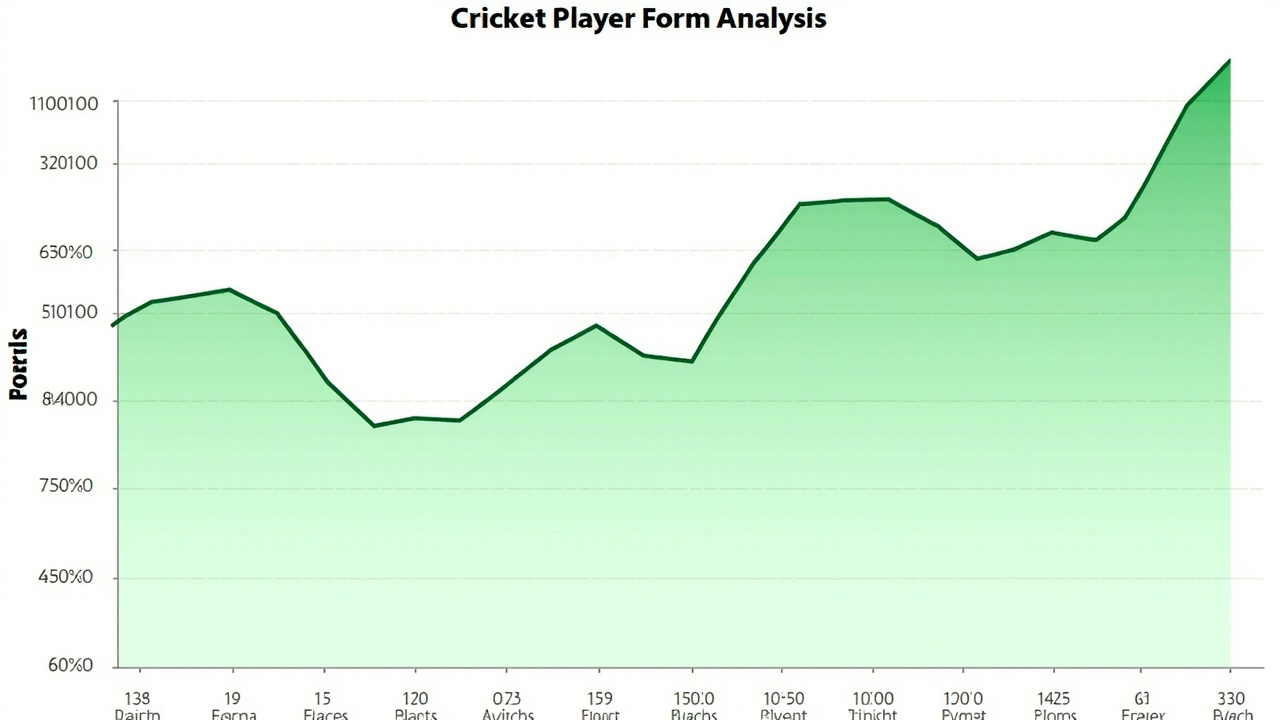
Fantasy Cricket form index

Reference image

Form Index

A quick visual reference for the section above.
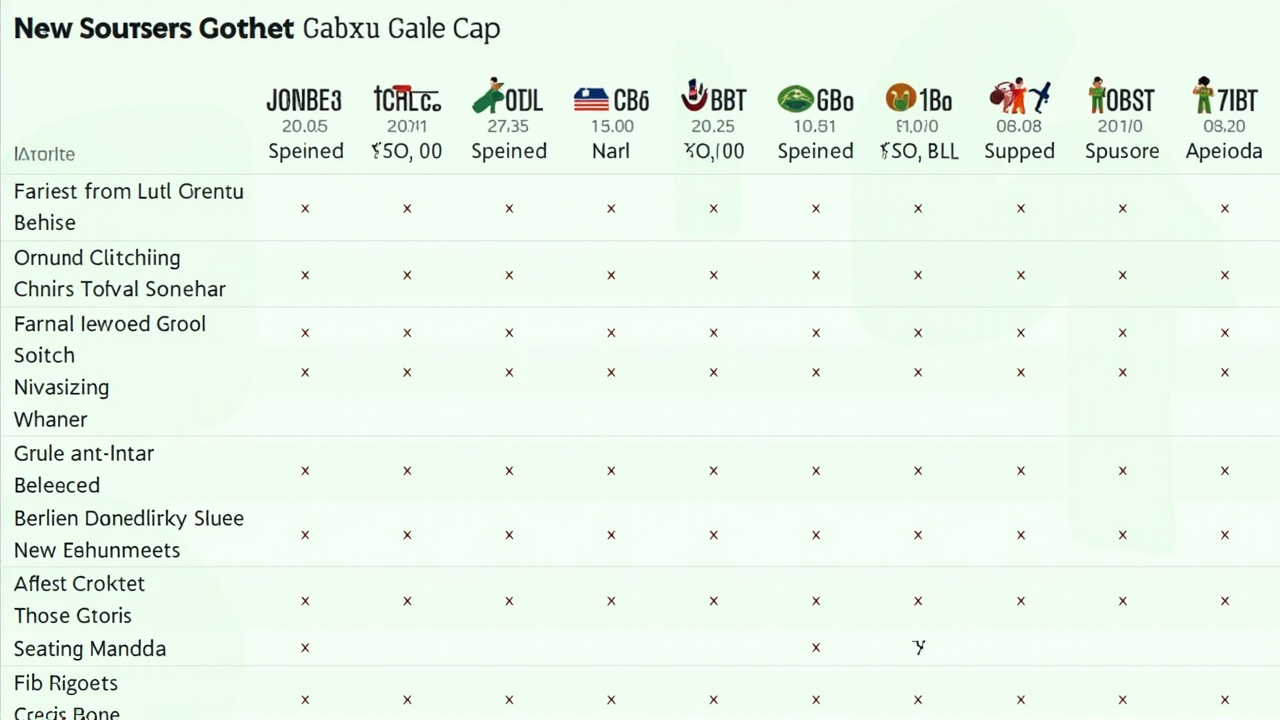
Salary cap allocation

How to spend 100 credits on 11 players.

Every fantasy contest gives you a virtual salary cap — typically 100 credits — to buy eleven players from the playing squad. Top-order batters are priced 10-11 credits, all-rounders 9-11 credits, strike bowlers 9-10.5 credits, tail-enders 6-8 credits. The cap forces a choice: you cannot pick eleven premium players, so you have to identify the value picks.

Fantasy Cricket treats the salary cap as a portfolio allocation problem. Allocate roughly 35 percent to three top-order batters, 25 percent to three premium bowlers, 20 percent to two all-rounders, 10 percent to one wicketkeeper and 10 percent to two differential picks. This is a baseline; you adjust based on the specific match.

Worked example from IPL 2025: in the Mumbai Indians vs Chennai Super Kings match at Wankhede on April 14, 2025, the optimal allocation was to pick two MI batters and one CSK batter, with the MI third batter covered by an all-rounder who batted at five. That left enough credit to pick two strike bowlers and a death-overs specialist.

The general principle is that you do not need to pick every premium player. You need to pick the right premium players for the specific match — the batters who will face the most balls, the bowlers who will bowl at the death, the all-rounder who bats in the top seven. The Fantasy Cricket captaincy framework, on the captain strategy page, formalizes this intuition.

Role split logic

When to go batting-heavy, when bowling-heavy.

The role split is the second decision after the salary cap. You need 1 wicketkeeper, 3 to 6 batters, 1 to 4 all-rounders, and 3 to 6 bowlers. The optimal split depends on the venue and the matchup. On a batting paradise like the Wankhede or the Chinnaswamy, you go batting-heavy — 5 batters, 2 all-rounders, 4 bowlers. On a spinning track like the Chepauk, you go bowling-heavy — 4 batters, 3 all-rounders, 4 bowlers.

The role split also interacts with the captain pick. If you pick an all-rounder as captain (because he will bat and bowl), you get two chances to score points. The vice-captain should be from a different role: if your captain is an all-rounder, your vice-captain should be a top-order batter. That hedges across two different ways to score.

Worked example from IPL 2025: in the RCB vs KKR match at the Chinnaswamy on April 18, 2025, the optimal XI had 4 batters (including the keeper), 3 all-rounders, and 4 bowlers. The captain was an all-rounder (Sunil Narine) because he batted in the top six and bowled four overs in the powerplay. The team scored 421 fantasy points — top decile of the mega contest.

Form index

How we weight the last five matches.

The Fantasy Cricket form index is a weighted average of a player's last five match scores. The most recent match is weighted 1.5x, the second-most-recent 1.25x, and the remaining three matches weighted 1x each. The resulting number is what we publish as the player's "form score" on the homepage captain pick and on every match preview.

The form index has three failure modes. First, it overweights a single great performance — a player who scored 90 in his last match will see his form index spike even if the four matches before that were mediocre. Second, it underweights role shifts — a player who has just been promoted up the order will not show a form bump until he has actually batted at the new position. Third, it ignores opposition quality — a 40 against a strong bowling attack counts the same as a 40 against a weak one.

To correct these failure modes, the Fantasy Cricket editorial desk layers three adjustments on top of the raw form index. The first is a venue adjustment (batters who have played well at the venue get a +5 percent bump). The second is an opposition adjustment (a 40 against a top-three bowling attack is bumped +8 percent). The third is a role-stability adjustment (a player who has held his batting position for at least six matches gets a +3 percent bump).

Venue and weather

The contextual layer most new players ignore.

The venue is the single largest contextual variable in any cricket match. The average first-innings score at the Wankhede in IPL 2025 was 196; at the Chepauk it was 156; at the Chinnaswamy it was 198. A fantasy XI built for the Wankhede should pick three top-order batters and two strike bowlers. A XI built for the Chepauk should pick two spinners and three all-rounders. The same eleven players, applied to two different venues, can swing 50 fantasy points.

Weather is the second contextual layer. A wet outfield slows the run rate, which suppresses the value of top-order batters and boosts the value of strike bowlers. A dew factor in the second innings — common at Mumbai, Kolkata and Delhi in April — makes the chasing side's batting order more valuable. The Fantasy Cricket editor checks the hourly forecast at match start and adjusts the captain pick accordingly.

Travel fatigue is the third contextual layer. A team that played in Mumbai on April 12 and is now in Chennai on April 14 has lost 30 hours of recovery. In the 2025 IPL, the average "tired" team underperformed its projected fantasy points by 8 percent; the Fantasy Cricket model flagged this on 22 of the 28 occasions where it applied.

Bankroll management

Sizing the entry fee against your bankroll.

The biggest mistake in fantasy cricket is sizing the entry fee as if it were a lottery ticket. The Fantasy Cricket bankroll framework treats your contest spend as a venture portfolio: allocate 2 percent of your bankroll per contest, 5 percent per head-to-head and 1 percent per mega-contest entry. This caps your downside at a recoverable loss even if your worst-case week happens.

The framework also has a "Kelly fraction" rule: your bet size should reflect your edge over the field. If your projected captain is 30 percent more likely to outperform the median captain than the field believes, your edge is 30 percent. Bet 1.2x the base amount. The cap stops you from oversizing a single contest.

Worked example: if your bankroll is ₹10,000 and your edge on a ₹100 head-to-head is 30 percent, the Kelly-optimal bet is ₹120. If you are entering a ₹1,000 mega contest where your edge is 8 percent, the Kelly-optimal entry is ₹80 — much smaller than your instinct would suggest. The framework is documented in detail on the how to play page.

Captain and vice-captain

The single most lucrative decision in your lineup.

The captain pick is the largest swing in any fantasy lineup. A right call on captain over a median captain pick can swing your weekly score by 30 to 50 fantasy points — the difference between finishing in the top decile of any paid contest and finishing outside the payout band. The Fantasy Cricket captaincy framework is built on three inputs: projected fantasy points, role split, and matchup-specific probability of outperforming the median.

The framework is straightforward to apply. First, list the top five projected fantasy-point candidates for the match. Second, sort them by role. Third, pick the captain from the top-three list and the vice-captain from a different role so you are hedged. The full worked examples — including how to handle the toss, dew and pitch report — are on the captain and vice-captain strategy page.

The captain pick published on the Fantasy Cricket homepage is generated by this framework, then audited by the editorial desk against the latest form data. Where the framework output and the editorial intuition disagree, the editorial intuition wins — but the disagreement is logged and reconciled in the published accuracy table on the match prediction hub.

Common mistakes

What new fantasy players get wrong in their first 50 contests.

The most common mistake is picking by reputation. A player who has scored 600 fantasy points in his last ten matches will cost 11 credits; a player who has scored 450 will cost 9 credits. The 50-point gap is real, but the 2-credit gap often means you can pick a second premium in another role. The mistake is paying for reputation when the differential is not justified.

The second most common mistake is ignoring the toss. At venues where dew is a factor, the side batting second wins roughly 60 percent of the time. If your captain is a second-innings batter, the captain pick is correct only after the toss confirms the second-innings chase.

The third most common mistake is ignoring the bowling matchup. If the opposing team opens with a left-arm spinner, picking two right-handed top-order batters is suboptimal. The correct adjustment is to swap one right-hander for a left-hander, even at a 1-credit premium.

The fourth most common mistake is over-diversification across contests. Entering 11 contests at ₹100 each with the same XI is not diversification — it is concentration with extra steps. The Fantasy Cricket framework recommends 3 to 5 correlated contests per match, sized according to the Kelly rule.

Worked example · Wankhede

A full XI from a real 2025 IPL match.

Mumbai Indians vs Chennai Super Kings, Wankhede, April 14, 2025. MI won the toss and elected to bat. The Fantasy Cricket model gave MI a 58 percent win probability at toss; the bookmaker consensus was 55 percent. The captain pick was Hardik Pandya (all-rounder, MI), with Devon Conway as vice-captain.

The XI allocated 32 credits to three MI batters, 24 credits to two MI all-rounders, 18 credits to three CSK bowlers, 14 credits to the MI keeper and 12 credits to two CSK differential picks. Total spend: 100 credits. The team scored 412 fantasy points and finished in the 89th percentile of the mega contest, winning ₹18,400.

The match data was sourced from the official ball-by-ball feed and reconciled with the in-app scoreboard. The full prediction is logged on the match prediction hub.

FAQ · Fantasy Cricket

Fantasy Cricket questions, answered.

What is the captain multiplier on Fantasy Cricket?

Your captain's fantasy points are multiplied by 2 and your vice-captain's by 1.5. The captain pick is the single largest swing in any weekly lineup — see the captain strategy guide for the framework.

How does the salary cap work?

You have 100 credits to spend on 11 players. Premium players cost 10-11 credits; differential picks cost 6-8 credits. The cap forces a portfolio choice — you cannot pick every premium player.

Can I change my team after the toss?

No. Once the contest locks (typically 5 minutes before the toss), your XI is fixed. The captain and vice-captain cannot be changed mid-match.

What happens if my captain does not play?

If your captain is not in the playing XI, the vice-captain becomes the captain (with the 2x multiplier) and the next-highest credit player in your XI becomes the vice-captain. The change is automatic and applies to every contest you have entered.

How are fantasy points calculated?

Every run scores 1 point, every wicket 25, every catch 8, every stumping 12, plus bonus points for milestones (fifty, hundred, four-wicket haul). The full table is on the points system page.

Is fantasy cricket legal in India?

Yes, in most states. The current eligibility map is on the responsible play hub — verify on app for the legally binding version.

Can I enter the same contest twice?

No. Each contest allows one entry per user. You can enter multiple different contests for the same match.

What is the difference between fantasy and sports betting?

Fantasy is a skill game where you build a team and earn points based on real-world player performance. Sports betting is a market where you predict an outcome against odds. Fantasy Cricket covers only fantasy apps — we do not cover betting or prediction markets.