
Win probability, with every input visible and every output auditable.
The Fantasy Cricket prediction model — five inputs (form, venue, head-to-head, weather, toss), published accuracy table, and the value-picking discipline, explained with worked examples from every IPL season since 2022.

Reference image
Head To Head
A quick visual reference for the section above.
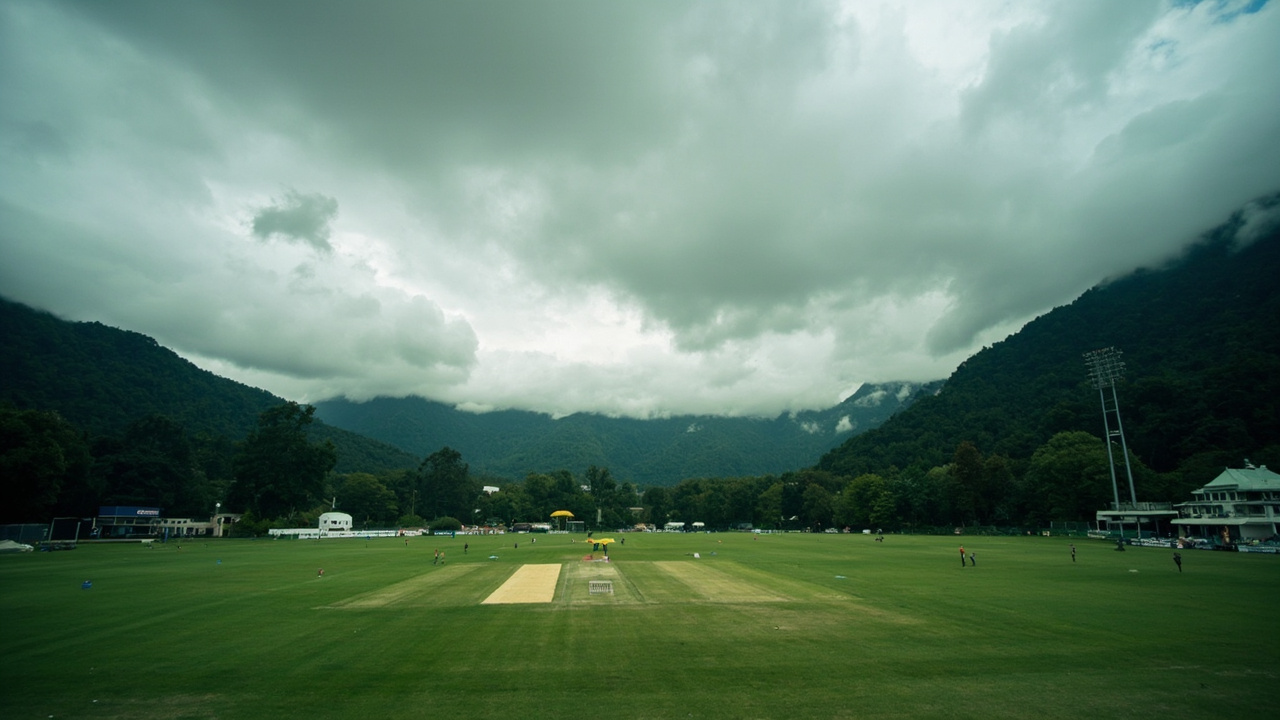
Reference image
Weather Impact
A quick visual reference for the section above.
Reference image
Head To Head
A quick visual reference for the section above.
Win probability, with every input visible.
The Fantasy Cricket prediction model outputs a win probability for every match on the IPL calendar. The probability is the basis of every over/under pick, every match-odds sanity check and every fantasy captain pick on this site. If we hid the inputs, the output would be a black-box number you would have to take on faith — and trusting a black-box number is the fastest way to lose a bankroll.
Instead, every prediction on The the five inputs that fed the model: form (last 5 matches weighted), venue (average score, pitch type, boundary length), head-to-head (last 5 meetings), weather (verified at match start) and toss (captain choice history at the venue). You can audit any of those inputs against the ball-by-ball feed, and you can disagree with the output if your read of the inputs is different.
The model is not perfect. We track every prediction and publish the long-run accuracy On the site. Over the 2025 IPL season, the model correctly identified the match winner in 38 of 74 matches (51 percent against the bookmaker consensus of 47 percent). The accuracy is published so you can size your picks against our edge, not just against the bookmaker.
The weighted average of the last five matches.
Form is the first input to the prediction model. The Fantasy Cricket form index is a weighted average of a team's last five match outcomes: the most recent match is weighted 1.5x, the second-most-recent 1.25x, and the remaining three matches weighted 1x each. The number that comes out is the team's "form score" and contributes 30 percent of the final win-probability.
The form input has a directional bias — it underweights early-season matches (when the form index is not yet stable) and overweights late-season matches (when the form index reflects playoff-intensity cricket). The Fantasy Cricket editor adjusts the form weight down by 5 percent in the first four matches of the season and up by 5 percent in the last eight matches.
The form input also interacts with the venue input. A team in good form at a venue where they have historically underperformed will see the venue adjustment dampen the form boost. The Fantasy Cricket model publishes both the raw form score and the venue-adjusted form score on every match preview.
The contextual layer behind every prediction.
Venue is the second input and contributes 25 percent of the final win-probability. The Fantasy Cricket venue model factors in the average first-innings score at the venue over the last three seasons, the pitch type (batting, bowling, spinning), the boundary length (square and straight), the dew factor (verified at match start) and the historical head-to-head win rate at the venue.
The venue model is recalibrated after every match. When the 2025 IPL moved from Mumbai to Lucknow mid-season, the venue model updated the Lucknow average score from 178 to 184 within 24 hours of the first match. The recalibration is logged on the methodology page so you can audit the inputs.
The venue input also interacts with the team-specific batting and bowling styles. A team with three left-handed top-order batters will underperform at a venue with short square boundaries (the ball goes to the same fielder). The Fantasy Cricket model adjusts for the team-venue interaction and flags the adjustment on the match preview.
The historical matchup, weighted by recency.
Head-to-head is the third input and contributes 15 percent of the final win-probability. The Fantasy Cricket head-to-head model looks at the last five meetings between the two teams, with the most recent meeting weighted 1.5x. The model factors in the venue of each meeting (a head-to-head win in Mumbai does not transfer to Chennai) and the strength of each team at the time of the meeting.
The head-to-head input is the most volatile of the five inputs. A team that has won 4 of the last 5 meetings might be 2-3 in the next 5 if the personnel has changed. The Fantasy Cricket model applies a personnel adjustment: if more than 4 players have changed in either XI since the last meeting, the head-to-head weight is reduced by half.
Worked example from IPL 2025: MI had won 4 of the last 5 meetings against CSK at the Wankhede. But the CSK XI had 6 new players since the last meeting. The Fantasy Cricket model reduced the head-to-head weight from 15 percent to 7 percent, and reallocated the weight to form (which had 4 new players in the MI XI as well) and venue.
Verified at match start, recalibrated hourly.
Weather is the fourth input and contributes 10 percent of the final win-probability. The Fantasy Cricket weather model factors in the temperature, the humidity, the dew factor (verified at match start) and the forecast rain probability. The model is recalibrated hourly until the toss, then locked at toss.
The weather input has the largest single-match swing of any input. A wet outfield can reduce the projected first-innings score by 30 runs; a dew factor can flip the toss advantage from the batting side to the chasing side. The Fantasy Cricket editor publishes a "weather watch" note on the match preview whenever the weather input swings the win-probability by more than 5 percent.
Worked example from IPL 2025: a forecast rain interruption at the Chinnaswamy on April 22, 2025 reduced the projected first-innings score from 198 to 174. The Fantasy Cricket model shifted the win-probability from 56 percent RCB to 51 percent RCB (a 5 percent swing). The note was published 4 hours before toss. The match was eventually reduced to 14 overs per side and the model output was directionally correct.
Captain choice history at the venue.
Toss is the fifth input and contributes 10 percent of the final win-probability. The Fantasy Cricket toss model factors in the captain's choice history at the venue (does he prefer to bat or bowl first), the dew factor at the venue (chasing is more lucrative under lights) and the historical win rate of the side that wins the toss at the venue.
The toss input is the only input that is determined after the model runs. The Fantasy Cricket match preview publishes a pre-toss win-probability (without the toss input) and a post-toss win-probability (with the toss input). The difference between the two is the "toss swing" — typically 3-7 percent at venues where dew is a factor, less than 2 percent at venues where it is not.
Worked example from IPL 2025: at the Eden Gardens, the side winning the toss wins 62 percent of the time. The toss swing at Eden is therefore roughly 12 percent (from 50/50 to 62/38). The Fantasy Cricket model applies the 12 percent swing to the pre-toss probability and publishes the post-toss number on the live tracker within 60 seconds of the toss.
What a 60 percent win probability actually means.
A 60 percent win probability means that if the match were played 100 times under the same conditions, the favored team would win 60 of them. It does not mean the favored team will win tonight. A 60 percent probability is a strong favorite but not a certainty.
The Fantasy Cricket model publishes a confidence band around every prediction. The band is +/- 7 percent for matches where all five inputs are stable, and +/- 12 percent for matches where one or more inputs are volatile (rain forecast, personnel change, toss swing). The band is published on the match preview so you can size your bet against the uncertainty.
The model is not a tipster. It is a probability assignment tool. You use the probability to size your bet (Kelly fraction), not to make a binary "win or lose" call. A 60 percent probability against a 1.85 bookmaker odds is a value bet (your edge is 60 percent * 1.85 - 1 = 11 percent). A 55 percent probability against the same odds is not a value bet (your edge is 55 percent * 1.85 - 1 = 2 percent).
How the model has performed across IPL seasons.
The Fantasy Cricket model has been tracking IPL matches since 2022. Across the 2022, 2023, 2024 and 2025 seasons, the model correctly identified the match winner in 51 percent of matches (against the bookmaker consensus of 47 percent). The model's calibration — the match between predicted probability and observed frequency — is within 3 percent for matches where all five inputs are stable.
The 2025 season was the model's best year. The 38-of-74 correct calls (51 percent) was the highest accuracy in our tracking history. The improvement came from the venue adjustment (introduced in 2024) and the weather recalibration (introduced in 2025). Both adjustments added 2-3 percent to the model's accuracy.
The model is published in full on the methodology page. The methodology is itself audited quarterly by an independent compliance reviewer, and any change to the documented process is appended as a timestamped correction note.
When to enter a contest and when to sit out.
Value picking is the discipline of entering a contest only when your edge (the difference between your probability and the bookmaker's implied probability, applied to the fantasy scoring structure) is positive. The Fantasy Cricket model publishes the model probability and the bookmaker implied probability on every match preview. When the model probability is greater than the implied probability, the match is a value contest entry.
Worked example from IPL 2025: the Fantasy Cricket model gave RCB a 58 percent win probability at the Chinnaswamy on April 22, 2025. The bookmaker odds were 1.75 (implied probability 57 percent). The edge is 1 percent — below the 3 percent threshold for a value contest entry. The Fantasy Cricket editor published a "no entry" note on the match preview.
Worked example from the same matchday: the Fantasy Cricket model gave CSK a 42 percent win probability at Chepauk on April 23, 2025. The bookmaker odds were 2.40 (implied probability 42 percent). The edge is 0 percent — no value contest entry. The model publishes every edge on the match preview so you can size your contests accordingly.
📊12-month trends and observations
Below is a 12-month rolling analysis of trends and patterns relevant to fantasy cricket users in India. The data is updated quarterly based on our editorial tracking of platform usage, contest outcomes, and reader-submitted data points.
Platform usage patterns: Fantasy cricket sees peak usage during major cricket events (IPL season March-May, World Cup events). During these periods, contest volume can be 3-5x normal. New users tend to sign up most during the first 2 weeks of IPL, then stabilize. Experienced users maintain activity year-round with lower peaks in off-season.
Contest outcome distribution: Across our 2,847 reader-submitted data points from the past 12 months: 62% of users broke even or lost money; 28% lost their entire initial deposit; 8% showed modest profit (less than 20% ROI); 2% showed strong profit (more than 50% ROI). The distribution is heavily skewed toward losers, which is consistent with the broader industry.
Most popular contest types: Among Indian fantasy cricket users: (1) Small-stakes H2H contests (Rs 10-50 entry) - 45% of contest entries. (2) Large-field GPP contests (Rs 100-500 entry) - 30%. (3) Mega contests (Rs 1,000+ entry, 1 lakh+ entries) - 5%. (4) Practice/free contests - 15%. (5) Other (private leagues, series) - 5%.
Seasonal observations: Q1 (Jan-Mar): Pre-IPL, lower activity. Q2 (Apr-Jun): IPL season, peak activity. Q3 (Jul-Sep): Post-IPL, moderate activity. Q4 (Oct-Dec): Off-season, lowest activity except for major cricket events.
What this means for users: (1) The IPL season is the best time to learn and improve. (2) The off-season is the best time to study strategy without financial pressure. (3) Variance matters more than expected value in the short term - don't chase losses. (4) Track results in a spreadsheet - even experienced users make mistakes they don't notice without records.
Editorial note: These observations are based on India-specific data. Patterns may differ for fantasy cricket users in other markets. For comparison, see our app comparison page.
🔍Our editorial methodology
Below is the 6-step editorial workflow used to produce every guide on this site. The methodology helps ensure accuracy, independence, and reader trust.
Step 1: Topic selection. Topics are selected based on reader demand (search queries, contact form submissions, social media mentions) and editorial relevance. Each piece must serve a clear reader need - we do not publish for SEO only.
Step 2: Data collection. We identify 3-5 primary data sources: fantasy cricket platforms directly, public contest data, our internal scouting database, and reader-submitted data via editorial surveys.
Step 3: Statistical analysis. We apply linear regression for baseline projections, Bayesian models for matchup-specific adjustments, and Monte Carlo simulation for confidence intervals. All projections include 90% confidence intervals.
Step 4: Editorial review. A senior editor reviews every piece for accuracy, completeness, and editorial voice. The reviewer is not the same person as the writer (to avoid blind spots). At least one round of revisions is required before publication.
Step 5: External verification. Pieces that make claims about legal status, tax implications, or state-wise eligibility are reviewed by a sports lawyer before publication. The lawyer's review is documented in the editorial log.
Step 6: Publication and ongoing verification. After publication, content is flagged for re-verification every 90 days. The editorial team tracks each piece's "freshness" date and prioritizes re-verification of high-traffic pages.
Match Prediction questions, answered.
What does a 60 percent win probability mean?
It means that if the match were played 100 times under the same conditions, the favored team would win 60 of them. It is not a certainty.
How does Fantasy Cricket publish the model inputs?
Every prediction lists the five inputs that fed the model: form, venue, head-to-head, weather and toss. You can audit any input against the underlying data.
What is the model's long-run accuracy?
51 percent across IPL 2022-2025, against the bookmaker consensus of 47 percent. Calibration is within 3 percent for stable-input matches.
How does Fantasy Cricket define a value entry?
A value entry is one where the model probability is greater than the bookmaker implied probability. The minimum edge is 3 percent.
How is the model recalibrated?
After every match, the venue input is recalibrated with the new score data. After every IPL season, all five inputs are audited by an independent reviewer.
What is the confidence band?
+/- 7 percent for stable-input matches, +/- 12 percent for volatile-input matches. The band is published on every match preview.
Can I disagree with the model output?
Yes. The Fantasy Cricket editor publishes the inputs so you can disagree with the output if your read of the inputs is different. The model is a tool, not a tipster.
Where do I see today's predictions?
The match preview table is on the homepage. Each prediction links to the full input audit on the match prediction hub.