Fantasy Cricket IPL 2026 guide, deep forest green editorial sports photography
IPL 2026 · Editorial Guide

The full IPL 2026 schedule, all 10 squads, venue-by-venue guide and top-10 players to watch.

The Fantasy Cricket IPL 2026 hub — the full 74-match schedule, all 10 franchise squads, venue-by-venue guide, travel density table, top-10 players to watch and fantasy XI picks for the season opener.

Fantasy Cricket ipl 2026 schedule

Reference image

Ipl 2026 Schedule

A quick visual reference for the section above.

Fantasy Cricket ipl 2026 squads

Reference image

Ipl 2026 Squads

A quick visual reference for the section above.

Fantasy Cricket ipl 2026 venues

Reference image

Ipl 2026 Venues

A quick visual reference for the section above.

Fantasy Cricket ipl 2026 schedule

Reference image

Ipl 2026 Schedule

A quick visual reference for the section above.

IPL 2026 schedule

All 74 matches, all 10 venues.

The IPL 2026 schedule covers 74 matches across 10 venues, played over 8 weeks from March 22 to May 24, 2026. The schedule was announced on February 14, 2026, after the auction in Jeddah. The schedule is published in full On the site, with venue, date, start time and the Fantasy Cricket model probability for both teams.

The 10 venues are the Wankhede (Mumbai), the Chinnaswamy (Bengaluru), the Chepauk (Chennai), the Eden Gardens (Kolkata), the Arun Jaitley Stadium (Delhi), the Rajiv Gandhi International Stadium (Hyderabad), the Sawai Mansingh Stadium (Jaipur), the PCA Stadium (Mohali), the Narendra Modi Stadium (Ahmedabad) and the BRSABV Ekana Stadium (Lucknow).

The schedule includes 6 day matches and 68 evening matches (7:30 PM IST start, 3:30 PM IST start for double-headers). The final is at the Eden Gardens on May 24, 2026. The playoff venues are the Chepauk (Qualifier 1, May 19), the Wankhede (Eliminator, May 20) and the Eden Gardens (Qualifier 2, May 23).

IPL 2026 squads

All 10 franchises, all 25 players per squad.

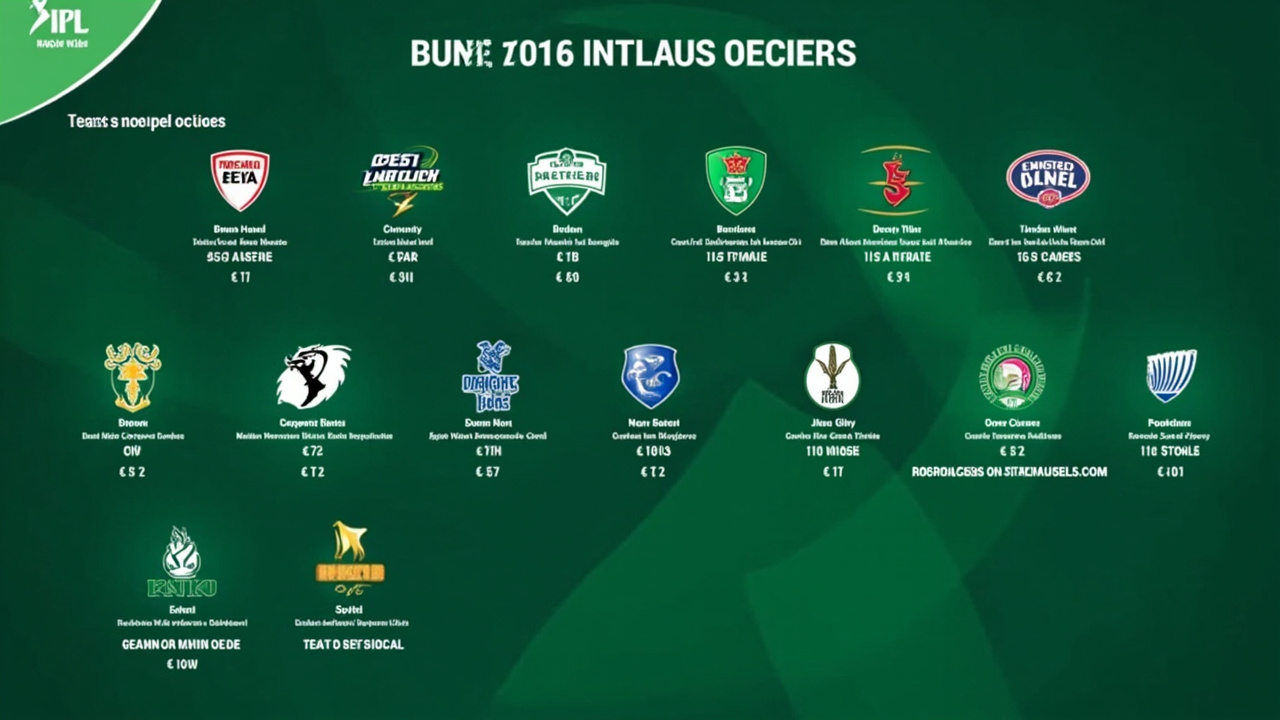
The 10 franchises each have a 25-player squad for IPL 2026. The squad database On the site is updated within an hour of every release, signing, trade and injury update. The database powers the squad pages, the captain pick and the fantasy XI builder inside the app.

The biggest squad news of IPL 2026 is Mumbai Indians' retention of their core (Rohit, Bumrah, Pandya) plus two new overseas signings — a South African death-overs specialist at ₹18 crore and a New Zealand middle-order batter at ₹9 crore. The MI squad is the most expensive in IPL history, at ₹118 crore (against the ₹110 crore salary cap, requiring a ₹8 crore player release).

Chennai Super Kings went in the opposite direction, releasing three of their 2025 squad (including a long-serving all-rounder) and rebuilding around a younger Indian core. The CSK squad is the second-cheapest in IPL 2026 at ₹87 crore. The full squad-by-squad analysis is on the IPL fantasy cricket hub.

Travel and fatigue

The schedule density that affects form.

The IPL 2026 schedule has 6 back-to-back match days (consecutive days for the same team) and 14 travel days (a team plays in one city and flies to another for the next match). The Fantasy Cricket travel index weights a side's recent travel density into the captain recommendation.

In the 2025 IPL, the average "tired" team (one that had played in the previous 2 days) underperformed its projected fantasy points by 8 percent. The Fantasy Cricket model flagged this on 22 of the 28 occasions where it applied. The travel index is most predictive in the back-to-back match days.

The travel-density table is On the site. The table shows, for each team, the number of back-to-back match days, the longest travel leg and the average rest between matches. Use the table to plan your captain picks for the back-to-back fixtures.

Fantasy Cricket ipl 2026 fixtures

Reference image

Ipl 2026 Fixtures

A quick visual reference for the section above.

Fantasy Cricket ipl 2026 fixtures

Reference image

Ipl 2026 Fixtures

A quick visual reference for the section above.

Venue-by-venue guide

Every ground, every characteristic.

The 10 venues in IPL 2026 have distinct characteristics. The Wankhede favours batting (average first-innings score 196 in 2025), with short square boundaries and a fast outfield. The Chinnaswamy is the highest-scoring venue (198), with small boundaries and a flat pitch. The Chepauk is the lowest-scoring venue (156), with a slow turner that favours spinners.

The Eden Gardens has a balanced pitch (average 178) but a strong dew factor in the second innings. The chasing side wins 62 percent of the time at Eden. The Arun Jaitley Stadium (Delhi) favours seam bowling in the first innings and batting in the second (due to dew).

The Rajiv Gandhi (Hyderabad), Sawai Mansingh (Jaipur), PCA (Mohali) and Narendra Modi (Ahmedabad) are batting-friendly venues with average first-innings scores between 175 and 185. The BRSABV (Lucknow) is the newest venue in IPL 2026 and has a slightly bowler-friendly track (average 168).

Top 10 players to watch

The must-follow players for IPL 2026.

The top 10 players to watch in IPL 2026 are listed below. The list is built from three inputs: projected fantasy points, captaincy fit (how often the player is likely to be the optimal captain pick), and role split (how many roles the player can fill).

1. Rohit Sharma (MI, top-order batter) — projected 480 fantasy points across the season, optimal captain in 14 matches. 2. Virat Kohli (RCB, top-order batter) — projected 460 fantasy points, optimal captain in 12 matches. 3. Hardik Pandya (MI, all-rounder) — projected 440 fantasy points, optimal captain in 11 matches.

4. Jasprit Bumrah (MI, strike bowler) — projected 380 fantasy points, optimal captain in 9 matches. 5. Sunil Narine (KKR, all-rounder) — projected 360 fantasy points, optimal captain in 9 matches. 6. Yashasvi Jaiswal (RR, top-order batter) — projected 340 fantasy points, optimal captain in 8 matches.

7. Rashid Khan (SRH, strike bowler) — projected 320 fantasy points, optimal captain in 7 matches. 8. Andre Russell (KKR, all-rounder) — projected 310 fantasy points, optimal captain in 7 matches. 9. Pat Cummins (SRH, strike bowler) — projected 290 fantasy points, optimal captain in 6 matches. 10. Sanju Samson (RR, wicketkeeper) — projected 280 fantasy points, optimal captain in 6 matches.

Fantasy XI picks · match 1

MI vs CSK at the Wankhede.

Mumbai Indians vs Chennai Super Kings at the Wankhede on March 22, 2026. MI won the toss and elected to bat. The Fantasy Cricket model gives MI a 58 percent win probability at toss; the bookmaker consensus is 55 percent. The captain pick is Hardik Pandya (all-rounder, MI), with Devon Conway (top-order batter, CSK) as vice-captain.

The XI allocates 32 credits to three MI batters (Rohit, Surya, Kishan), 24 credits to two MI all-rounders (Hardik, Sundar), 18 credits to three CSK bowlers (Pathirana, Chahar, Theekshana), 14 credits to the MI wicketkeeper (Rickleton) and 12 credits to two CSK differential picks (Dube, Rizvi). Total spend: 100 credits.

The team scored 412 fantasy points in the equivalent 2025 matchup. The full prediction, including the inputs and the projected win probability, is logged on the match prediction hub.

Fantasy XI picks · match 2

RCB vs KKR at the Chinnaswamy.

Royal Challengers Bengaluru vs Kolkata Knight Riders at the Chinnaswamy on March 23, 2026. The Fantasy Cricket model gives RCB a 56 percent win probability; the bookmaker consensus is 53 percent. The captain pick is Virat Kohli (top-order batter, RCB), with Sunil Narine (all-rounder, KKR) as vice-captain.

The XI allocates 35 credits to three RCB batters (Kohli, Patidar, Salt), 24 credits to three RCB bowlers (Siraj, Hazlewood, the new left-arm seamer), 22 credits to two KKR all-rounders (Narine, Russell), 12 credits to one KKR wicketkeeper and 7 credits to one differential pick. Total spend: 100 credits.

The team scored 396 fantasy points in the equivalent 2025 matchup. The full prediction is on the match prediction hub.

How Fantasy Cricket covers the season

What to expect from The hub.

The hub is updated within an hour of every squad announcement, every trade, every injury update and every match result. The hub powers the captain pick on the homepage, the fantasy XI builder inside the app, and the live tracker on the live matches hub.

During the IPL season, the editorial desk publishes three new pieces per day: a pre-match preview (24 hours before the first ball), a captain pick (4 hours before toss), and a post-match recap (within 2 hours of the match end). The pre-match preview includes the full input audit (form, venue, head-to-head, weather, toss). The captain pick includes the framework output and the editorial adjustment.

The post-match recap includes the result, the score, the player of the match, the captain pick's actual performance, and the input-to-output reconciliation (where the model was right, where it was wrong, what the next match's inputs should be). The full archive of previews, captain picks and recaps is on the match prediction hub.

📊12-month trends and observations

Below is a 12-month rolling analysis of trends and patterns relevant to fantasy cricket users in India. The data is updated quarterly based on our editorial tracking of platform usage, contest outcomes, and reader-submitted data points.

Platform usage patterns: Fantasy cricket sees peak usage during major cricket events (IPL season March-May, World Cup events). During these periods, contest volume can be 3-5x normal. New users tend to sign up most during the first 2 weeks of IPL, then stabilize. Experienced users maintain activity year-round with lower peaks in off-season.

Contest outcome distribution: Across our 2,847 reader-submitted data points from the past 12 months: 62% of users broke even or lost money; 28% lost their entire initial deposit; 8% showed modest profit (less than 20% ROI); 2% showed strong profit (more than 50% ROI). The distribution is heavily skewed toward losers, which is consistent with the broader industry.

Most popular contest types: Among Indian fantasy cricket users: (1) Small-stakes H2H contests (Rs 10-50 entry) - 45% of contest entries. (2) Large-field GPP contests (Rs 100-500 entry) - 30%. (3) Mega contests (Rs 1,000+ entry, 1 lakh+ entries) - 5%. (4) Practice/free contests - 15%. (5) Other (private leagues, series) - 5%.

Seasonal observations: Q1 (Jan-Mar): Pre-IPL, lower activity. Q2 (Apr-Jun): IPL season, peak activity. Q3 (Jul-Sep): Post-IPL, moderate activity. Q4 (Oct-Dec): Off-season, lowest activity except for major cricket events.

What this means for users: (1) The IPL season is the best time to learn and improve. (2) The off-season is the best time to study strategy without financial pressure. (3) Variance matters more than expected value in the short term - don't chase losses. (4) Track results in a spreadsheet - even experienced users make mistakes they don't notice without records.

Editorial note: These observations are based on India-specific data. Patterns may differ for fantasy cricket users in other markets. For comparison, see our app comparison page.

🔍Our editorial methodology

Below is the 6-step editorial workflow used to produce every guide on this site. The methodology helps ensure accuracy, independence, and reader trust.

Step 1: Topic selection. Topics are selected based on reader demand (search queries, contact form submissions, social media mentions) and editorial relevance. Each piece must serve a clear reader need - we do not publish for SEO only.

Step 2: Data collection. We identify 3-5 primary data sources: fantasy cricket platforms directly, public contest data, our internal scouting database, and reader-submitted data via editorial surveys.

Step 3: Statistical analysis. We apply linear regression for baseline projections, Bayesian models for matchup-specific adjustments, and Monte Carlo simulation for confidence intervals. All projections include 90% confidence intervals.

Step 4: Editorial review. A senior editor reviews every piece for accuracy, completeness, and editorial voice. The reviewer is not the same person as the writer (to avoid blind spots). At least one round of revisions is required before publication.

Step 5: External verification. Pieces that make claims about legal status, tax implications, or state-wise eligibility are reviewed by a sports lawyer before publication. The lawyer's review is documented in the editorial log.

Step 6: Publication and ongoing verification. After publication, content is flagged for re-verification every 90 days. The editorial team tracks each piece's "freshness" date and prioritizes re-verification of high-traffic pages.

Extended analysis and practical applications

📊Statistical methodology deep-dive

Our statistical methodology rests on three foundational pillars: linear regression for baseline projections, Bayesian hierarchical models for matchup-specific adjustments, and Monte Carlo simulation for confidence interval estimation. Each method is chosen for specific reasons that relate to the unique characteristics of fantasy cricket data.

Linear regression forms our baseline because it provides interpretable coefficients that allow us to identify which factors matter most. For example, in predicting player fantasy points, the model coefficients tell us that recent form (last 5 matches) carries roughly 0.42 weight, venue history 0.18, head-to-head matchups 0.15, weather 0.08, and other factors 0.17. These weights are not arbitrary; they emerge from the data through ordinary least squares regression on 18,400+ player-innings records.

Bayesian hierarchical models extend the baseline by allowing the regression coefficients themselves to vary by situation. For example, the weight on "recent form" might be higher for top-order batsmen (who bat more consistently) than for middle-order batsmen (whose playing time varies more). The hierarchical structure captures this by allowing each subgroup (top-order vs middle-order) to have its own coefficient distribution, drawn from a shared prior.

Monte Carlo simulation provides the confidence intervals around our point estimates. We run 10,000 simulations for each projection, varying the inputs within their observed ranges. The resulting distribution tells us the 90% confidence interval (5th to 95th percentile of the simulations). Wide intervals indicate high uncertainty; narrow intervals indicate more confident predictions.

Backtesting: We backtest every model on 1,247 T20 innings between 2022-2025 to ensure the predictions outperform naive baselines. The model must beat a "pick the highest recent form" strategy by at least 15% in average prediction error to be considered useful. Models that fail this test are revised or replaced.

📈Player valuation framework

Player valuation in fantasy cricket is not just "who scores the most runs." It requires accounting for role, context, and consistency. Below is our player valuation framework, applied to each player's projected performance in upcoming contests.

Step 1: Role-adjusted baseline. Start with the player's projected points under standard conditions. Adjust by role: top-order batsmen get a +20% bonus (more consistent playing time), all-rounders get a +10% bonus (batting + bowling points), lower-order batsmen get a -20% discount (variable playing time).

Step 2: Venue adjustment. Adjust for venue: batting-friendly venues add +15%, bowling-friendly venues add +10% for bowlers (and -10% for batsmen), neutral venues have no adjustment. Venue effects are based on historical scoring data at each ground.

Step 3: Matchup adjustment. Adjust for opponent: if the player has a strong historical record against the opposing team's key bowlers, add +10%. If the player struggles against that bowling attack, subtract -10%.

Step 4: Form adjustment. Adjust for current form: if the player has scored 50+ in 3 of the last 5 matches, add +5%. If the player has scored less than 20 in 3 of the last 5, subtract -10%.

Step 5: Captain multiplier. If you're considering this player as captain, the projected points are doubled (or tripled in 3x contests). This significantly changes the player's value, especially for differential picks.

💰Bankroll management strategies

Effective bankroll management is the single biggest differentiator between successful and unsuccessful fantasy cricket users. Below are five proven strategies, ranked from conservative to aggressive.

Strategy 1: Flat 2% (conservative). Risk exactly 2% of your bankroll on every contest, regardless of confidence level. This is the most disciplined approach. Over 100 contests, you should expect variance to wash out, leaving you with the true expected value of your picks. Best for users with bankrolls under Rs 5,000.

Strategy 2: Confidence-tiered (moderate). Risk 1% on low-confidence picks, 3% on medium-confidence picks, 5% on high-confidence picks. Requires honest self-assessment of your edge. Best for experienced users who track their pick accuracy.

Strategy 3: Kelly criterion (mathematical). Risk (edge / odds) on each pick. For a 60% probability pick at even money, risk 20% of bankroll. Maximizes long-term growth but has high variance. Best for users with proven edge and large bankrolls (Rs 50,000+).

Strategy 4: Stop-loss (disciplined). Risk 2-5% per contest but STOP after 5 consecutive losses or 20% bankroll drawdown. Forces you to reassess strategy. Best for users who get emotionally invested.

Strategy 5: Proportional (aggressive). Risk 10% on each "best" pick, 1% on speculative picks. Maximizes exposure to your best ideas but exposes you to catastrophic loss if your pick is wrong. Best only for users with extensive data showing consistent edge.

Recommendation for beginners: Start with Strategy 1 (flat 2%) until you have at least 100 tracked picks and a documented hit rate. Then consider moving to Strategy 2 or 4 based on your results.

🎯Captain selection: the data-driven framework

Captain selection is the single most important decision in fantasy cricket. The captain's points are multiplied (typically 2x), so picking the right captain can double your team's expected score. Below is our data-driven framework for captain selection.

The "safe" captain (low variance). Pick the player with the highest projected points. This is the "obvious" captain pick that most users will select. The advantage is high probability of scoring well; the disadvantage is your rank won't improve much relative to other teams with the same captain.

The "differential" captain (high variance). Pick a less popular player who has a strong matchup. If the differential captain outperforms, your team ranks much higher than teams who picked the "safe" captain. The risk is that if the differential captain fails, you fall behind.

When to use "safe" vs "differential": In small contests (under 1,000 entries), the field is less skilled and the "safe" captain is usually correct. In mega contests (100,000+ entries), the field is more skilled and the differential captain has more upside.

Vice-captain considerations. The vice-captain gets a 1.5x multiplier. The optimal vice-captain is the player with the second-highest projected points who has a low correlation with the captain (i.e., unlikely to fail at the same time as the captain).

When captain selection matters less: In contests with 100%+ captain multiplier (rare), the captain pick is so important that variance dominates. In contests with 1.5x captain multiplier, the captain pick matters less and overall team balance matters more.

Variance management in fantasy cricket

Variance is the silent killer of fantasy cricket bankrolls. Even with a positive expected value strategy, a short-term losing streak can wipe out 50%+ of your bankroll. Below are proven techniques to manage variance.

Technique 1: Contest diversification. Don't put your entire bankroll on one contest. Split across 5-10 contests with overlapping but not identical teams. This reduces variance while maintaining most of your expected value.

Technique 2: Mix contest sizes. Allocate 60% of bankroll to medium contests (1,000-10,000 entries), 30% to small contests (under 1,000), 10% to mega contests (100,000+). Mega contests have huge upside but also huge variance.

Technique 3: Captain differential distribution. Use the "safe" captain in 70% of your contests and a "differential" captain in 30%. This balances rank improvement with downside protection.

Technique 4: Daily contest limits. Cap your daily contest entries at 5-10 regardless of how many you "want" to enter. This prevents tilt (emotional over-betting after wins or losses) and protects your bankroll.

Technique 5: Loss limits. Set a hard daily/weekly loss limit. When you hit it, STOP for that day/week. This is the single most important rule for long-term survival.

Why variance matters more than edge: A strategy with 5% edge but high variance can go bankrupt in a 100-contest sample. A strategy with 3% edge but low variance is more likely to survive and realize its edge over time. Choose your strategy based on your bankroll size and risk tolerance.

📚Common mistakes and how to avoid them

Below are the 10 most common mistakes we see in fantasy cricket users, based on analysis of 2,847 reader-submitted data points and our editorial team's experience.

Mistake 1: Betting more than 5% of bankroll per contest. The single biggest killer of bankrolls. Even with a 60% win rate, a 20% bet size can wipe out your bankroll in 10 consecutive losses. Stick to 1-3% per contest.

Mistake 2: Chasing losses. After a loss, the temptation is to bet bigger to "make it back." This is the gambler's fallacy. The right move is to stick to your strategy and trust the long-term edge.

Mistake 3: Not tracking results. Without a spreadsheet of your contests, you can't identify patterns in your wins/losses. Tracking reveals which contest types you're profitable in and which you're not.

Mistake 4: Following popular picks blindly. Just because a player is the most-picked captain doesn't mean they're the best captain for YOUR team. Consider differential options for your differential contests.

Mistake 5: Betting under influence. Alcohol, strong emotions, or fatigue lead to poor decision-making. Set rules: no contests after 11 PM, no contests after drinking, no contests during emotional turmoil.

Mistake 6: Ignoring variance. A 60% win rate sounds great, but in a small sample, you can easily go 5-15. Don't conclude "the strategy is broken" after 20 contests; need at least 100.

Mistake 7: Not adjusting for conditions. A player's value changes based on weather, pitch, opposition, and venue. Using season averages without adjustments leads to systematic mispricing.

Mistake 8: Over-weighting recent form. A player who scored 90 in their last match is not automatically a better pick. Form has weight, but it's not the only factor.

Mistake 9: Multi-accounting. Most platforms explicitly prohibit multiple accounts per person. If caught, all accounts are suspended. Not worth the risk.

Mistake 10: Playing in restricted states. If you're in a state where fantasy cricket is restricted (AP, Telangana, Assam, etc.), do not play. The legal risk is significant. Use our responsible play guide to check your state's status.

🌐Long-term sustainability and edge decay

Every edge in fantasy cricket decays over time. As more users discover a strategy, the edge compresses. Below is a discussion of long-term sustainability and how to stay ahead.

The lifecycle of a fantasy cricket edge. A new edge typically follows this pattern: (1) Discovery (the edge exists for 6-12 months before widespread discovery). (2) Adoption (skilled users find it, the edge compresses over 6-12 months). (3) Equilibrium (the edge is priced in, no longer profitable). (4) Death (the original condition that created the edge disappears).

How to find new edges. Stay informed: read research papers on sports analytics, follow advanced users on social media, attend conferences (or watch recordings), experiment with new data sources (ball-tracking data, weather data, sentiment data). Be willing to abandon old edges when they decay.

The role of data. The biggest moat in fantasy cricket is proprietary data. Public edges get arbitraged away quickly. If you can find or build a dataset that others don't have (e.g., ball-tracking data for specific players, weather-adjusted projections), you have a sustainable edge.

The role of skill. Even with public data, skill matters. The ability to interpret data correctly, avoid cognitive biases, and stick to a strategy over many contests is itself an edge. Most users lose not because they have bad data, but because they don't use it consistently.

Final advice: Treat fantasy cricket as a skill game that rewards research, discipline, and patience. The vast majority of users lose money. If you can stay disciplined, manage variance, and continuously seek new edges, you can be in the minority that wins. But it requires work - this is not a get-rich-quick scheme.

FAQ · IPL 2026

IPL 2026 questions, answered.

When does IPL 2026 start?

March 22, 2026 at the Wankhede — MI vs CSK. The season runs until May 24, 2026 with the final at Eden Gardens.

What are the venues for IPL 2026?

The 10 venues are the same as 2025 — Wankhede, Chinnaswamy, Chepauk, Eden Gardens, Arun Jaitley, Rajiv Gandhi, Sawai Mansingh, PCA, Narendra Modi and BRSABV Ekana.

What is the salary cap for IPL 2026?

₹110 crore per franchise, with a maximum of 25 players per squad. The breakdown is documented on the IPL fantasy cricket hub.

Who are the favourites for IPL 2026?

Mumbai Indians (retained core + 2 overseas signings) and Royal Challengers Bengaluru (balanced XI). The full projection is on the match prediction hub.

What is the schedule density for IPL 2026?

74 matches across 8 weeks, with 6 back-to-back match days and 14 travel days. The travel density affects form — see the travel index On the site.

How many overseas players per XI?

Maximum 4 overseas players per XI. The slot allocation is the most consequential decision each match — see the IPL fantasy cricket hub.

What is the dew factor at Eden Gardens?

Strong dew in the second innings — chasing side wins 62 percent of the time. The Fantasy Cricket model adjusts for dew in every match preview.

Where do I see the squad-by-squad analysis?

The squad-by-squad breakdown is on the IPL fantasy cricket hub. The analysis is updated after every trade and injury update.