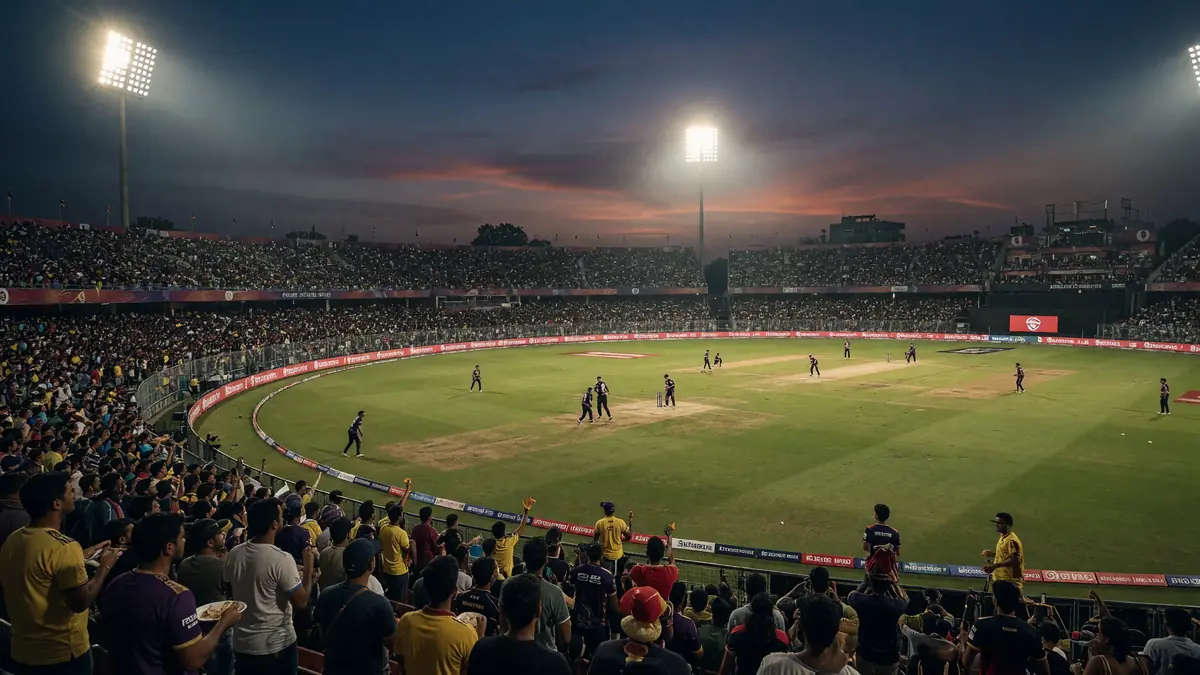
What the table looked like before the first ball
Match 12 sat early in the IPL 2026 calendar, but the stakes already felt uneven. Kolkata Knight Riders arrived at Eden Gardens still hunting a first points haul after consecutive defeats to Mumbai Indians and Sunrisers Hyderabad. The side sat ninth on the table with a net run rate of −1.964 under captain Ajinkya Rahane. That is the kind of position that forces fantasy users to decide whether a home bounce is real or simply hope priced into the credit map.
Punjab Kings walked in with the opposite problem. A five-wicket win over Chennai Super Kings had left them third with four points and a net run rate of +0.637 under Shreyas Iyer. Momentum, not survival, shaped their shortlist. Priyansh Arya’s 39 off 11 balls in the previous chase was the clearest recent signal that Punjab’s top order could clear the powerplay without waiting for middle-order stabilisers.
Head-to-head history tilted toward the hosts on paper. Across 35 IPL meetings, KKR led 21–13 overall and held a 10–3 Eden Gardens record against Punjab sides. Historical venue edges matter less than current form once a season is underway, yet for multi-entry builders they still informed ownership splits: KKR names carried home-ground floor while Punjab names carried the fresher run-rate and strike-rate evidence.
Fixture
KKR vs PBKS · Match 12 · Mon 6 Apr 2026 · 7:30 PM IST · Eden Gardens, Kolkata
Table snapshot
KKR 9th · 0 pts · NRR −1.964 · PBKS 3rd · 4 pts · NRR +0.637
Head-to-head
35 meetings: KKR 21 · PBKS 13 · Eden Gardens: KKR 10–3
Published lean
Pre-match notes projected Punjab Kings as the likelier winners on form and balance.
How both benches were framed before toss
The pre-match predicted Kolkata Knight Riders XI listed Ajinkya Rahane (c), Finn Allen, Cameron Green, Angkrish Raghuvanshi (wk), Rinku Singh, Ramandeep Singh, Sunil Narine, Anukul Roy, Vaibhav Arora, Varun Chakaravarthy, Kartik Tyagi and Blessing Muzarabani. That is a top order mixing Rahane’s floor with Allen’s ceiling, a middle order that still trusted Rinku and Ramandeep for finishers’ work, and a bowling group built around Narine, Varun and a pace pair of Arora and Tyagi with Muzarabani as the overseas length option.
Punjab Kings’ predicted XI named Prabhsimran Singh (wk), Priyansh Arya, Shreyas Iyer (c), Nehal Wadhera, Marcus Stoinis, Shashank Singh, Cooper Connolly, Marco Jansen, Vijaykumar Vyshak, Arshdeep Singh, Yuzvendra Chahal and Xavier Bartlett. The side stacked left-right combinations through the top six and kept two genuine multi-skill paths in Stoinis and Connolly, with Jansen offering the third bat-ball route if his bowling overs stayed intact.
Reading the two XIs for fantasy
KKR handed the gloves in the predicted sheet to Angkrish Raghuvanshi and the captaincy to Rahane. Fantasy captaincy was a separate decision: Rahane’s recent 67 against Mumbai Indians made him a high-floor vice-captain candidate, while Finn Allen’s 28 off 7 balls signalled the pure upside lane if the new ball moved his way.
Punjab listed Shreyas Iyer as on-field captain and Prabhsimran as keeper. The fantasy swing names on that side were Connolly (bat-plus-ball volume already stacking early in the season) and Iyer himself (68 runs across two matches). Confirming batting order and bowling lengths thirty minutes before toss remained the right discipline even when the predicted XI looked stable on paper.
Eden Gardens numbers that shaped the credit map
Pitch and weather notes for the night listed 31°C under cloudy conditions, a batting-friendly surface best suited to pace, and an average first-innings score of 170. Chasing sides at the venue were described as strong, with a 61% winning rate. For a 100-credit Dream11 build, that combination pointed to three practical rules: lock at least one new-ball specialist from each side, keep a chase-capable top-order batter on both halves of the ledger, and avoid pure spin stacks that lack a batting path.
Cloudy Kolkata evenings can still offer early seam if the ball is new and the outfield is heavy. That lifted the relative value of Arshdeep Singh, Marco Jansen, Vaibhav Arora and Kartik Tyagi in the first six overs, even on a surface tagged batting-friendly overall. Once the ball softened, multi-skill names such as Narine, Connolly and Stoinis became the cleaner route to both batting and bowling returns without stretching the salary cap twice.
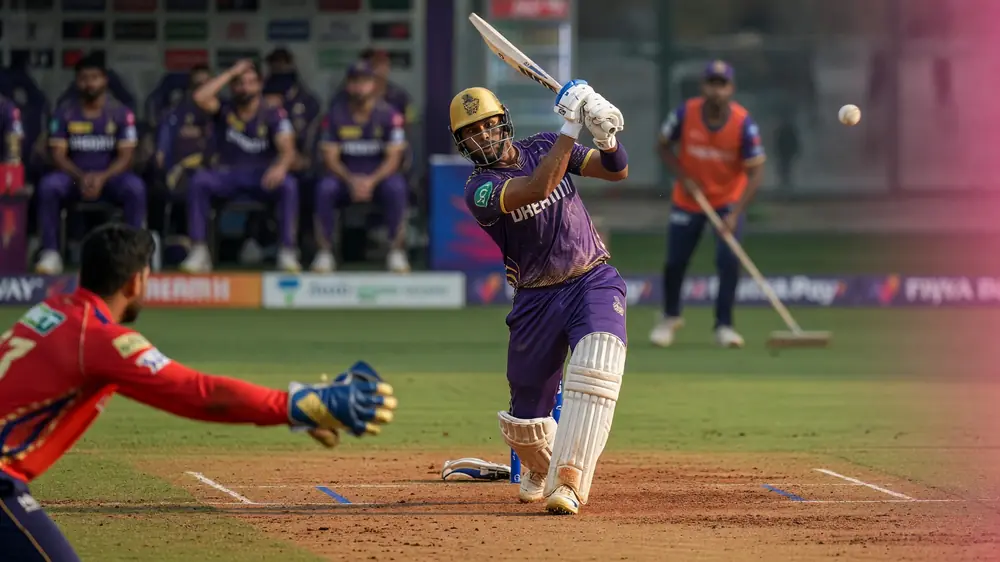
The 170 first-innings average also framed role allocation. On grounds that regularly clear 165-plus, five batters and three all-rounders often beat a bowling-heavy 3–4–4 split unless the surface suddenly grips. Match 12’s published surface read did not support a heavy spin lean. Users who forced three pure spinners without a batting path were fighting the venue math rather than using it.
The four form lines that moved ownership
Four published form lines dominated the Match 12 slate. Cooper Connolly had already stacked 108 season runs, including an unbeaten 72. Shreyas Iyer carried 68 runs across two matches. Finn Allen had 65 in two innings, including 28 off 7 balls. Ajinkya Rahane sat on 75 in two matches, including that 67 against Mumbai Indians. Those four names covered the safe captain lane, the differential batting ceiling, and the home-side floor that multi-entry portfolios needed to balance.
Cooper Connolly
108 season runs, including an unbeaten 72. Primary multi-skill ceiling on the Punjab side and a published grand-league captain option.
Shreyas Iyer
68 runs in two matches, on-field captain. Cleanest small-league captain path on batting volume and role security.
Finn Allen
65 in two innings, including 28 off 7. High-variance KKR opener for users who needed unique rank without abandoning Eden floor.
Ajinkya Rahane
75 in two matches, including 67 vs MI. High-floor vice-captain lane for small leagues and core portfolio tickets.
Around that core, Angkrish Raghuvanshi’s previous 52 kept him live as a keeper-batter path, while Priyansh Arya’s 39 off 11 balls made him the pure powerplay differential on the Punjab half. Sunil Narine remained the classic KKR punt — expensive when he misses, decisive when he takes early wickets and faces a few balls up the order. Vijaykumar Vyshak was the published Punjab bowling punt for users who needed a cheaper seam path beside Arshdeep and Jansen.
Safe lane, risk lane, and the published splits
Captain and vice-captain guidance for Match 12 named Shreyas Iyer and Cooper Connolly as captain options, with Ajinkya Rahane and Finn Allen as vice-captain options. The small-league captaincy choice sat with Shreyas Iyer; the grand-league captaincy choice sat with Cooper Connolly. That split still reads cleanly months later: Iyer offered role security and recent volume, while Connolly offered two scoring paths and lower projected ownership among users who treated him as a pure batter rather than a multi-skill multiplier.
Safe build
C: Shreyas Iyer (PBKS, BAT)
VC: Ajinkya Rahane (KKR, BAT)
Iyer’s 68 across two matches plus Rahane’s 75, including 67 vs MI, gave the cleanest dual-floor pair for small leagues.
Risk build
C: Cooper Connolly (PBKS, AR)
VC: Finn Allen (KKR, BAT)
Use for 20–30% of large-field entries when unique rank mattered more than median floor.
A middle path kept Iyer as captain and flipped the vice-captain slot between Rahane and Allen based on toss and powerplay conditions. If KKR chased under lights and Allen retained the new-ball strike, Allen was the cleaner VC. If KKR defended or the surface looked two-paced early, Rahane’s floor was the safer multiplier partner. Connolly stayed locked as a core all-rounder even when he did not carry the armband.
Keeper, all-rounder and bowler slots that moved the line
Wicketkeeper was the first slot to fix. Angkrish Raghuvanshi held the KKR gloves in the predicted sheet and had just scored 52, which made him the default keeper-batter path for users who wanted home-side floor. Prabhsimran Singh held the Punjab gloves; he was the alternate when credit was tight or when users wanted a second Punjab top-order name without paying full price for both Iyer and Connolly as multipliers. Neither keeper was safe if batting order slipped below number six — a standing rule that still applies on every IPL night.
All-rounder tier for Match 12
Tier 1: Cooper Connolly (PBKS) and Sunil Narine (KKR) — the two multi-skill names with the clearest published combination of batting access and bowling overs. One of them belonged in nearly every serious portfolio ticket.
Tier 2: Marcus Stoinis (PBKS), Cameron Green (KKR), Marco Jansen (PBKS). Confirm bowling lengths before promoting any of them into the multiplier conversation.
Tier 3: Ramandeep Singh, Anukul Roy, Shashank Singh — situational depth. Use only when the credit map is tight and a premium is benched late.
Bowling slots should have respected the pace lean on the published surface. Arshdeep Singh and Vaibhav Arora were the cleanest pure seam paths; Kartik Tyagi and Xavier Bartlett were the late differentials if they kept their places. Spin still had a role through Narine, Varun Chakaravarthy and Yuzvendra Chahal, but pure spin stacks without a batting path sat poorly against a 170 first-innings average and a 61% chase rate.
A 100-credit Eden Gardens template from that night
The construction below follows the predicted XIs and the four key form lines published ahead of Match 12. Treat it as a historical template for how the credit map was meant to be spent, not as a live lock for a future fixture. The combination shape used in expert notes was 3–3–3–2 — three batters, three all-rounders, three bowlers and two keepers-or-flex paths depending on how the app labelled Raghuvanshi and Prabhsimran — with punt picks Vijaykumar Vyshak and Sunil Narine carrying the differential bowling work.
Suggested XI shape
- WK: Angkrish Raghuvanshi (KKR)
- BAT: Shreyas Iyer (C), Ajinkya Rahane (VC), Finn Allen, Priyansh Arya
- AR: Cooper Connolly, Marcus Stoinis, Sunil Narine
- BOWL: Arshdeep Singh, Vaibhav Arora, Yuzvendra Chahal, Vijaykumar Vyshak
Role math inside that shape stayed close to a balanced 5–6 team split rather than a one-sided stack. Iyer and Rahane covered dual-floor batting; Connolly and Narine carried the multi-skill work; Arshdeep and Arora respected the pace lean; Vyshak was the published cheap seam punt. Users who needed grand-league uniqueness often flipped the armband to Connolly and kept Iyer as vice-captain, accepting a quieter pure-batting floor in exchange for two scoring paths on the multiplier.
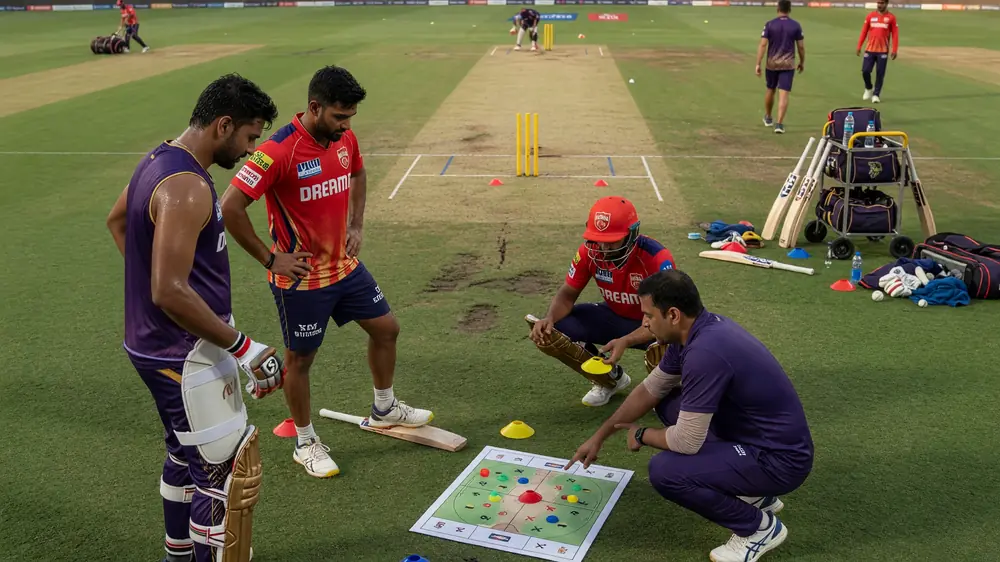
If a late KKR bowling confirmation freed two credits, the first trim was usually one of the pure batters outside Iyer and Rahane, not Connolly. If a late Punjab bowling confirmation removed Vyshak, the replacement should have stayed seam-for-seam rather than jumping to a second spinner solely because the name was cheap. Promote by role, not by vacancy — a rule that still separates disciplined builders from reactive ones when teamsheets move after the toss.
How the build was meant to flex after the coin
Eden’s published chase lean — 61% wins for sides bowling first, average first innings 170 — made the flex rules simple. If a side bowled first and won the powerplay, that side’s pacers gained relative value for the rest of the night. If a side batted first and posted 170-plus, chasing batters needed more aggression in the first six overs, which lifted powerplay specialists over middle-overs accumulators.
If KKR bowled first
Keep Narine locked. Lean into KKR pace options and hold Iyer’s batting value regardless of chase or defend. Connolly’s bowling points became more important if Punjab batted first under cloud cover.
If KKR batted first
Allen, Rahane and Raghuvanshi gained captain-vice relevance. Arshdeep and Jansen bowling points rose on the Punjab comeback path. Re-price the AR slot if Narine’s batting overs shrank in a defend scenario.
If a premium was benched late
Replace like-for-like by role. A missing Punjab all-rounder should not have been replaced by a pure KKR batter solely because the name was cheap — promote by role and accept the credit refund.
Multi-entry structure for a ten-ticket set on that night: six tickets on the Iyer–Rahane pair with minor bowling churn, two tickets elevating Connolly to captain while keeping Iyer as VC, and two high-variance tickets on the Connolly–Allen pair. That spread kept exposure to the median outcome without abandoning uniqueness in large fields.
Why the published edge sat with Punjab Kings
Pre-match notes projected Punjab Kings as the likelier winners. Punjab arrived with a five-wicket win over Chennai Super Kings, four points, a positive net run rate and a top order that had already shown powerplay violence through Priyansh Arya. KKR still owned the historical Eden edge and a captain in Rahane who had just scored 67, but two straight defeats and a net run rate of −1.964 left them chasing the contest rather than setting it.
Fantasy ranking and match tipping were not the same question. A Punjab win did not automatically mean a Punjab-heavy Dream11 stack. The safer portfolio still mixed both sides so that Rahane, Allen and Narine could clear returns even if Punjab took the points. Across 35 prior meetings KKR led 21–13, and the Eden Gardens record sat at 10–3 for the hosts — another reason not to treat the early-season table gap as a one-way ownership signal.
For deeper captain math, venue overlays and 100-credit construction patterns beyond a single archived fixture, the standing reference remains inside Fantasy Cricket.
Common questions about Match 12
When was the match played?
Monday 6 April 2026 at Eden Gardens, Kolkata, with a 7:30 PM IST start.
Who was the safe Dream11 captain pick?
Shreyas Iyer was the published small-league captain. Pair with Ajinkya Rahane as vice-captain for the core build.
Who carried the grand-league armband?
Cooper Connolly was the published grand-league captain option on 108 season runs, including an unbeaten 72.
What did the Eden pitch look like for fantasy?
Batting-friendly surface best suited to pace, average first innings 170, 61% wins for chasing sides, weather around 31°C and cloudy.
Where did the two sides sit on the table?
KKR sat 9th with no points and NRR −1.964 after losses to MI and SRH. PBKS sat 3rd with 4 points and NRR +0.637 after beating CSK.
Which punt picks were named?
Expert notes flagged Vijaykumar Vyshak and Sunil Narine as the main differential bowling punts inside a 3–3–3–2 combination.
The Match 12 lessons that still travel
Three lessons from the 6 April 2026 preview still travel into later IPL weeks. First, early-season table gaps are not automatic ownership maps. KKR’s 10–3 Eden record against Punjab sides mattered even while the hosts sat ninth. Second, multi-skill captaincy remains the cleanest way to buy two scoring paths without doubling salary spend — Connolly’s 108-run start made that concrete. Third, venue averages beat vibes: a 170 first-innings mean and a 61% chase rate told builders to keep pace options and chase-capable top-order batters before stacking pure spin.
- Re-check both XIs about thirty minutes before toss. One late bowling promotion can free two credits.
- Keep keeper value honest. Raghuvanshi’s previous 52 only mattered if he stayed high enough in the order.
- Respect the published pace lean on batting-friendly Eden surfaces — do not stack three pure spinners without a batting path.
- Use Iyer for small-league floor and Connolly for grand-league uniqueness rather than forcing one armband across every ticket.
- Replace benched premiums by role, not by vacancy. A missing all-rounder is not automatically a pure batter upgrade.
- Separate match tipping from fantasy ranking. A Punjab lean did not require abandoning KKR’s home top-order floor.
Punjab owned the form line and the published match lean. KKR owned the historical Eden edge and a captain who had just scored 67. The build that balanced those facts — dual-side batting floor, multi-skill multipliers, pace-first bowling — is the one that still teaches clean construction when the first powerplay swings 20 runs either way.
Present-day relevance is simple: every later Eden Gardens night in IPL 2026 still collides with the same three inputs this fixture made explicit — chase bias near 60%, first-innings averages near 170, and the premium on multi-skill names who can clear both batting and bowling returns without breaking the salary cap twice.
Disclaimer: Fantasy cricket involves financial risk and is restricted in several Indian states. Verify eligibility on your app before entering paid contests. Analysis is editorial, not financial advice. Play only with money you can afford to lose.
Match facts referenced from Cricket Addictor’s KKR vs PBKS Dream11 preview for IPL 2026 Match 12 (6 Apr 2026, 13:41 IST).