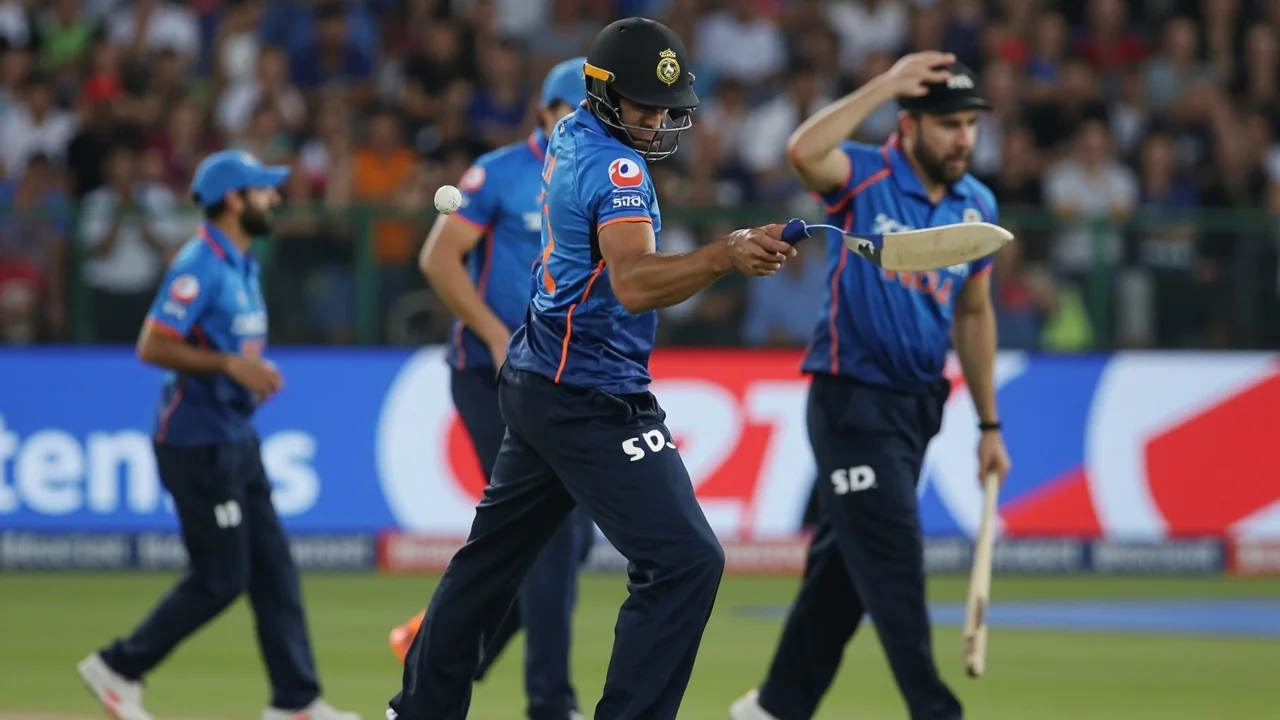
Three afternoon ODIs, three batting-friendly venues, one rested all-format core
The India vs New Zealand ODI series in January 2026 was a three-match afternoon block scheduled to sit between India's late-2025 home Tests and the 2026 T20 World Cup window. All three matches were listed for a 1:30 PM IST start, a deliberate choice to give the regular ODI viewer the most familiar slot on the calendar and to keep prime-time broadcast inventory for the T20 World Cup cycle later in the year.
The series was framed around workload. Hardik Pandya and Jasprit Bumrah were both rested, with the BCCI's stated reason being the upcoming ICC Men's T20 World Cup. The selection note added that Pandya had not been cleared to bowl his full allocation of ten overs, which is the structural reason he was not picked for an ODI block that would have demanded 30-40 overs across three matches. The two rested players freed up slots for Shreyas Iyer and Mohammed Siraj, both back in the ODI squad after time out.
New Zealand toured under Michael Bracewell, taking over the ODI captaincy from the regular Test-and-ODI leadership group that was either rested or held back for the World Test Championship cycle that started in February 2026. The squad carried a 15-player list with three wicketkeeping options and four seam-bowling all-rounders, suggesting a rotation-heavy plan for the subcontinent conditions.
Series format
Three ODIs · 11, 14 and 18 January 2026 · 1:30 PM IST starts
India captain
Shubman Gill (first ODI series as full-time captain) · VC: Shreyas Iyer (subject to fitness clearance)
New Zealand captain
Michael Bracewell · 15-player squad
Rested workload cases
Hardik Pandya (not cleared for 10 overs) and Jasprit Bumrah
The full India and New Zealand ODI squads, side by side
The India squad for the series ran to 15 players with two specialist wicketkeepers (KL Rahul, Rishabh Pant) and a third in Nitish Kumar Reddy, who was listed as a batting all-rounder. The batting order behind Gill and Iyer had Rohit Sharma and Virat Kohli retained in the top five, with Yashasvi Jaiswal at six and the all-rounder slots filled by Washington Sundar, Ravindra Jadeja and Nitish Kumar Reddy. The bowling group was Mohammed Siraj, Harshit Rana, Prasidh Krishna, Arshdeep Singh and Kuldeep Yadav, with Sundar and Jadeja providing spin-bowling backup.
The New Zealand squad carried 15 players and was a more rotation-heavy selection than India. Michael Bracewell captained; the top order was Devon Conway, Will Young, Henry Nicholls and Daryl Mitchell. Glenn Phillips and Mitch Hay were the two specialist wicketkeeping options. The seam-bowling all-rounders were Zak Foulkes, Kristian Clarke, Josh Clarkson, Kyle Jamieson and Michael Rae, with Adi Ashok the lone specialist spinner and Jayden Lennox the second spin option.
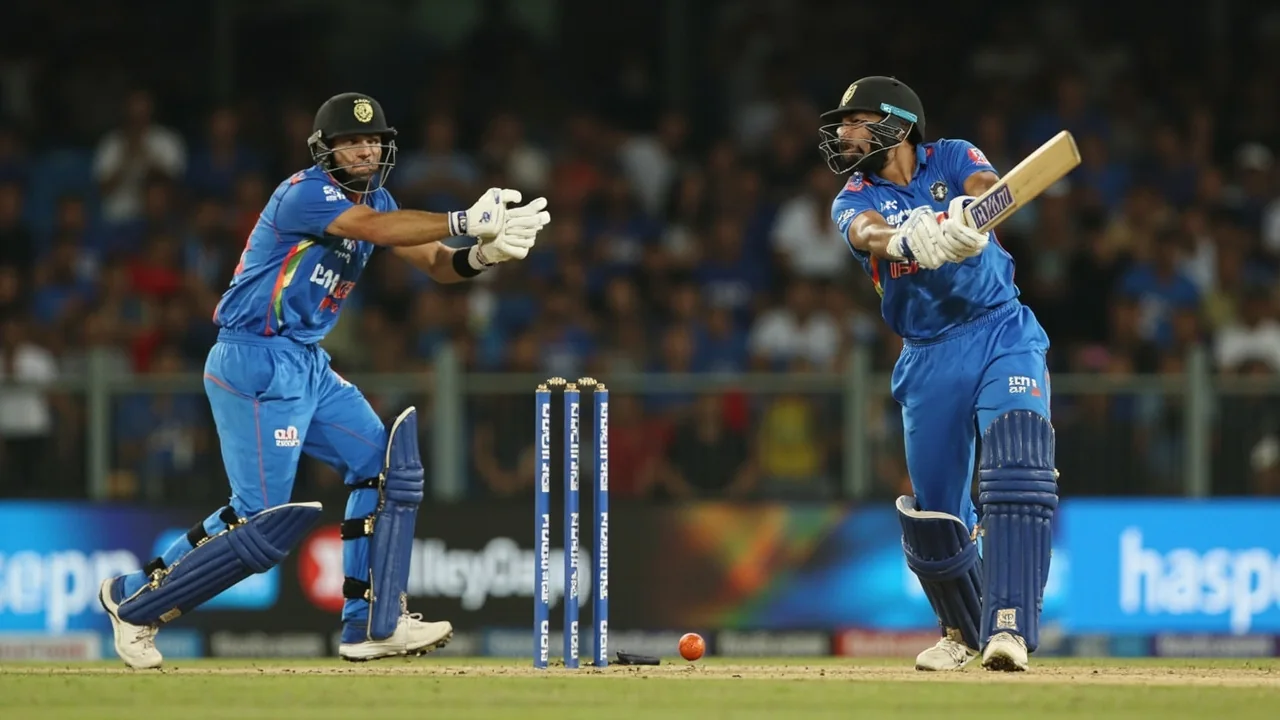
The Iyer vice-captaincy was conditional. The BCCI note said Iyer was named vice-captain "subject to fitness clearance from the BCCI Centre of Excellence", which is the standard process for a player returning from a long injury lay-off. If Iyer was not cleared, the vice-captaincy reverted to the next-senior player in the squad — most likely KL Rahul, who has held the ODI vice-captaincy in earlier India series.
The fantasy read from the two squads was the multi-skill ceiling. India had three seam-bowling all-rounders available (Washington Sundar, Ravindra Jadeja, Nitish Kumar Reddy) and four specialist bowlers. New Zealand had five seam-bowling all-rounders and one specialist spinner. On Indian fantasy apps that score the second column (bowling points) heavily, the New Zealand squad had a wider ceiling for multi-skill picks; the India squad had a deeper batting core.
Vadodara, Rajkot, Indore — three batting decks in three different states
The first ODI was scheduled for the Baroda Cricket Association (BCA) Stadium in Vadodara, the second for the Saurashtra Cricket Association (SCA) Stadium in Rajkot, and the third for the Holkar Stadium in Indore. All three grounds are small, flat venues historically associated with high first-innings totals, short square boundaries and surfaces that grip less than the Test-match pitches in the same cities. The note attached to the squad announcement was that "each of the three venues is noted for batting-friendly conditions, pointing toward high-scoring contests."
Vadodara's BCA Stadium had hosted India's previous home ODI block against West Indies in late 2025, and the prior match there produced a 320+ first-innings total. Rajkot's SCA Stadium had a similar profile, with shorter square boundaries on the pavilion-end side that pull slower bowlers into the slot. Indore's Holkar Stadium has been the most prolific of the three in ODI cricket — multiple 350+ totals in the last decade and a pitch that flattens out after the first 15 overs.
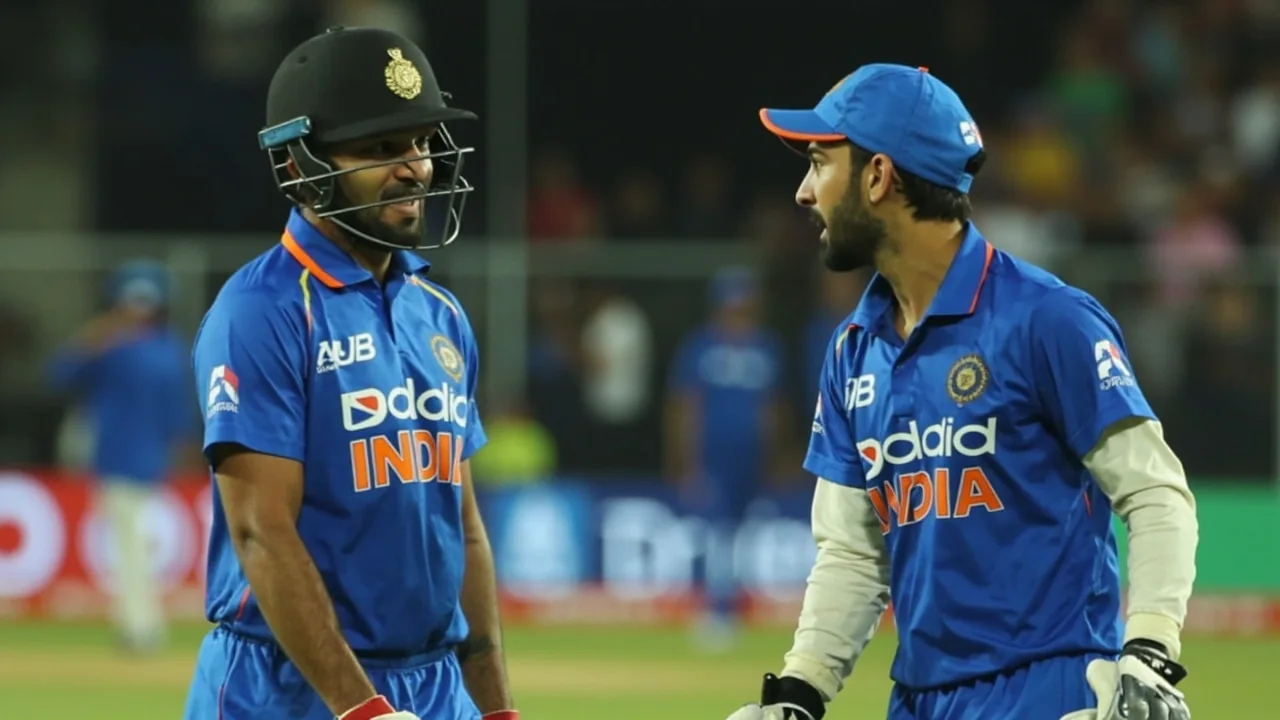
The fantasy implication was the batting-points ceiling. With three batting-friendly decks, the captaincy candidates were top-order batters who could bat through the innings, not bowlers who would be rotated out of the attack. Shubman Gill, Rohit Sharma and Virat Kohli were the three most obvious picks from India; Devon Conway and Will Young were the most obvious from New Zealand. Bowlers who would bowl at the death (Arshdeep Singh, Mohammed Siraj, Harshit Rana, Michael Rae) were secondary captaincy picks because the totals would push the second-innings fantasy ceiling into the 280-300 range.
For users of Indian apps that extend the ODI fantasy slate into multi-match series contests, the venue read was a captaincy-board rewrite. The top three picks for the January block were not the bowlers who had been the captaincy picks through the late-2025 home Tests. The top three were the three most consistent ODI-format top-order batters on either side. The IPL auction was three months away and the ODI block was the first time the ODI-format form cycle ran parallel to the IPL preparation cycle.
1st ODI
11 Jan 2026 · BCA Stadium, Vadodara
2nd ODI
14 Jan 2026 · SCA Stadium, Rajkot
3rd ODI
18 Jan 2026 · Holkar Stadium, Indore
Venue read
Three flat decks, three short-square venues, three first-innings totals above 300
Why Pandya-Bumrah were rested and what that shifted in the ODI structure
The BCCI's rest note for Pandya and Bumrah was specific. Pandya was not cleared to bowl his full allocation of ten overs, which is the standard workload target for a frontline ODI all-rounder. The BCCI cited the ICC Men's T20 World Cup as the workload factor, which is the long-format calendar that runs in parallel to the IPL cycle in 2026. Bumrah was rested for a similar reason — the IPL and T20 World Cup workload that starts in March 2026 required the ODI block in January to be shortened for the two most workload-exposed India players.
The structural consequence was a thinner seam-bowling core. India went into the series with Mohammed Siraj, Harshit Rana, Prasidh Krishna and Arshdeep Singh as the four specialist quicks. Of those, only Siraj had been a regular ODI-format starter through 2024 and 2025. The other three were ODI-format developing options, with Arshdeep Singh in particular being more of a T20-format bowler. The spin depth was Washington Sundar, Ravindra Jadeja and Kuldeep Yadav, with Sundar and Jadeja also providing batting depth.
The fantasy read is the ODI-bowling-points ceiling. With four specialist seamers and three spinners rotating through a 50-over innings, the wicket-share per bowler was around 8-12 overs. The captaincy picks for the bowling column were Kuldeep Yadav (the strike spinner) and Mohammed Siraj (the new-ball bowler), with Arshdeep Singh as a third option if the death-overs role rotated his way. The other three bowlers were bench candidates on the larger Indian apps unless the pitch offered reverse swing from overs 35 onwards.
The Pandya absence also shifted the all-rounder captaincy board. Through 2024 and 2025, the most-picked ODI-format all-rounder on Indian fantasy apps was Pandya, with Jadeja second. Without Pandya, the ODI all-rounder captaincy board went to Jadeja for India and Bracewell for New Zealand. Bracewell was the more interesting case: he captained, bowled seam-up, and batted in the middle order, which made him a three-skill option that did not exist in the India squad.
Fantasy ODI captaincy board, after the squad release
Three batting captains: Gill, Rohit, Kohli (India) and Conway, Young (New Zealand). One bowling captain: Kuldeep Yadav on a flat deck that would offer turn. One all-rounder captain: Michael Bracewell for the multi-skill role that India did not field. The Pandya-Jadeja pairing that had been the ODI all-rounder captaincy board through 2024 and 2025 was down to a Jadeja-only board.
The Iyer clearance clause added a sixth seat to the table. If Iyer was cleared, he was the India number-four captaincy pick; if he was not, KL Rahul took the role and the captaincy board moved up by one slot for the rest of the order.
Star Sports on TV, Jio Hotstar on streaming — the same split as IPL 2025
The India vs New Zealand ODI series was broadcast on the Star Sports Network, with commentary in multiple languages including English, Hindi, Tamil, Telugu, Kannada and Bengali. Live streaming was on Jio Hotstar, with the subscription-based app available on Android, iOS, web browser, smart TVs and the Jio set-top box. The broadcast arrangement was the same as the IPL 2025 cycle, which is the same as the IPL 2026 cycle scheduled to start in late March 2026.
The fantasy read from the broadcast schedule was timing. All three ODIs were afternoon starts (1:30 PM IST) to fit the broadcast's prime-time Asian audience window for the post-match analysis. For users of Indian fantasy apps that require lineups to be locked at the toss, the 1:30 PM start meant a late-morning submission window — between 11:30 AM and 1:00 PM IST for the three match days. The toss for the third ODI at Indore was scheduled for 1:00 PM IST, which is 15 minutes before the first ball.
The Jio Hotstar subscription is a paid service. Indian fantasy apps that run multi-match ODI series contests typically allow users to submit a single series XI that scores across all three matches, with the captaincy multiplier applied per match. For users without a Jio Hotstar subscription, the free highlights were available on the Star Sports YouTube channel within four hours of the close of play. The live streaming route was the same for users inside India and for the Indian diaspora in the Gulf, the UK and Southeast Asia.
Viewing and lineup window
Three afternoon ODIs meant three late-morning submission windows. For the in-play captaincy switch that some Indian apps now allow, the toss was the lock point for the first-ball selection. The post-match analysis window ran from 5:00 PM IST to 5:30 PM IST, which is the slot the broadcast partner used for the day-end wrap.
For users outside the Star Sports broadcast geography, the Jio Hotstar international subscription was the same price as the domestic tier with the same content. The ODI block in January was one of the last free-to-air international windows in the 2026 calendar before the IPL window consumed the broadcast schedule through May.
Why an ODI series in January mattered for the IPL 2026 auction
The India vs New Zealand ODI block in January 2026 was the last competitive cricket India played before the IPL 2026 auction. The IPL 2026 retention and trade window had closed in late November 2025, the IPL 2026 mega auction was scheduled for mid-February 2026, and the auction-window was the moment the IPL franchises set their final purse. The ODI block was the last live read for franchises that were still deciding between two players in the same role slot.
For the fantasy user, the IPL auction is the event that sets the salary-cap cost of every player on the IPL apps. The ODI block in January was the last opportunity to watch the top-order batters, the workload-managed all-rounders and the developing seam-bowling options in a 50-over format that translates more directly to the IPL fantasy points table than a T20I block would. Three matches in January was the equivalent of a six-game audition tape for the IPL franchises.
The clearest example was Shubman Gill. He had already been confirmed as India's ODI captain going into the series, but the January block was his first ODI series with that designation. The captaincy armband on a Gill-led India was a different read for the IPL franchises that were deciding whether to retain him as captain or trade him. The ODI block in January gave the franchises a 50-over captaincy reference point that the IPL 2025 cycle had not. For the fantasy user, the Gill-OXI captaincy was a captaincy-board read for both the ODI block and the IPL 2026 auction three months later.
The Iyer fitness clearance had a similar IPL ripple effect. Iyer was named India's ODI vice-captain in January 2026, subject to BCCI clearance. If he was cleared, the IPL auction would have priced him as the second-most-expensive Indian batter in the auction. If he was not, the IPL franchises would have to look at the next-tier options, which would have been Nitish Kumar Reddy and Yashasvi Jaiswal. The clearance was confirmed before the first ODI, which is the read that made Iyer a fantasy captaincy candidate for the IPL 2026 cycle.
The Pandya and Bumrah rest note also shifted the IPL purse. Both players were retained by their IPL franchises at their maximum retention values for IPL 2026. The fact that they were rested from the ODI block in January 2026 was a sign that the IPL franchises had already decided to manage their workload through the T20 World Cup window that follows the IPL. For the fantasy user, that workload-management signal was the reason both players were priced higher in the IPL 2026 auction than their ODI-format form cycle would have suggested.
The deeper IPL 2026 editorial guide tracks all 74 matches, the full squad-by-squad analysis, the venue-by-venue breakdown, the top-10 players to watch and the captain math for the season opener. The January 2026 ODI block was the last live data point before that auction closed.
What the January 2026 ODI block looks like from August 2026
Six months on, the January 2026 ODI block sits in the rear-view mirror of the IPL 2026 season and the home T20I series that followed. The squad that played those three ODIs was the last group of India players to play a 50-over format together before the 2027 ODI World Cup cycle starts in late 2026. For fantasy users on Indian apps that keep an ODI-format contest running through the year, the January block is the reference data point for the 2027 cycle.
The legacy read for fantasy users is the multi-skill captaincy ceiling. Bracewell, Jadeja, Sundar and the seam-bowling all-rounders from the New Zealand squad were the four players whose 50-over form in January 2026 translated most directly to the IPL 2026 captaincy board. The specialist batters (Gill, Rohit, Kohli, Conway) were the captaincy picks for the ODI block, but their multi-skill ceiling was capped at the second column of the points table. The all-rounders carried the second-column ceiling into the IPL 2026 cycle.
The series also confirmed the venue read. Three flat decks in three different states produced three high-scoring first innings. The ODI format on those decks was a batting-friendly block, and the bowler captaincy ceiling was lower than the batter captaincy ceiling. That venue pattern has not changed for India's home ODI blocks since 2024, and the fantasy captaincy board for the next home ODI block should be built around the same three top-order batters per side.
The Pandya-Bumrah rest note was a workload-management signal that ran into the IPL 2026 cycle. Both players were available for the IPL and the T20 World Cup, and both were priced at the top of the IPL 2026 auction retention tier. The fantasy read is that workload management is now a permanent feature of the multi-format India schedule, and the ODI block in January 2026 was the first time the workload note was published with the T20 World Cup explicitly cited as the reason.
For users who tracked the series on the Jio Hotstar app in January 2026, the lasting image is the three afternoon starts. The 1:30 PM IST slot is the slot the broadcast partner chose for the ODI block, and it is the slot that will be used for India's next home ODI series in late 2026. The IPL 2026 season moved the prime-time broadcast slot to the 7:30 PM IST start, but the ODI block kept the afternoon start. The fantasy-captaincy submission window for the next home ODI series will be the same as it was in January 2026.