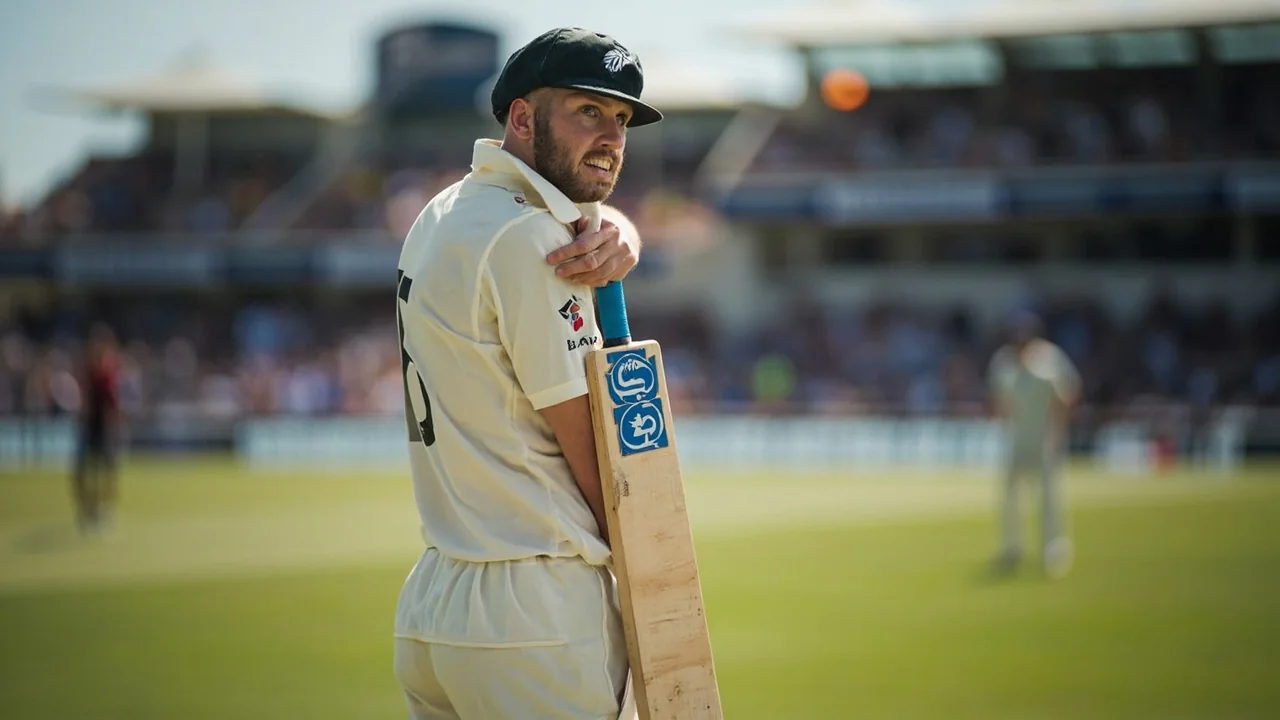
A 160-run margin that took four sessions, not five
England started the final day at Trent Bridge needing 161 more runs with six wickets in hand and a settled night-watchman at the crease. New Zealand needed seven wickets and a session of reverse-swing, full-length bowling from the right end. By lunch on day five, the chase was over and the visiting side was spraying drinks in front of a half-empty pavilion. The scoreboard read England 207 all out; the series read New Zealand 2-1.
The decider finished shortly after lunch on 29 June 2026. Jamie Smith's 60 was the only sustained resistance in the second innings, after England had been pruned to 103 for four overnight. The numbers that decided the morning were the ones that did not make the front page: two direct-hit run-outs in the first hour, and a Mitchell Santner spell that asked the same question of Joe Root four times in eight balls before Josh Tongue holed out to mid-off.
This was not the rout the margin suggests. England were still in the game when Harry Brook called correctly on day three and chose to bat. New Zealand had to win the toss twice in the series — they did not — and they had to absorb the absence of Kane Williamson after the first Test, Matt Henry and Glenn Phillips through injury, and a workload-managed Kyle Jamieson. They did it anyway.
Series result
New Zealand 2-1 England · 3-Test series completed 29 June 2026 at Trent Bridge
Final margin
England 207 all out chasing 368; NZ won by 160 runs
Day-five resistance
Jamie Smith 60; England 103/4 overnight
Where it leaves NZ
Third in the WTC standings behind Australia and South Africa
Latham's "old-school Test cricket" line was not a slogan
Tom Latham's press conference at the end of day four landed two sentences that did the work of a tactical breakdown. "It was a little bit of old-school Test cricket. The boys showed a lot of fight." The first half was about the fourth-innings chase pattern that had looked dead on day three: 220 runs in a session, Daryl Mitchell's century in 188 balls, a seventh-wicket stand that ate 28 overs and turned the innings into a job interview for the England bowlers.
There was nothing tactical about the dismissals on day five. Henry Nicholls swooped on a wild pull at mid-on to throw down the stumps at the bowler's end with Joe Root a yard short of his ground. Mitchell Santner, fielding at cover, picked up the ball in his bowling action, set, and hit the Bulls-Eye at the non-striker's end to catch Josh Tongue backing up too far. Two direct hits in eight overs; that was the session.
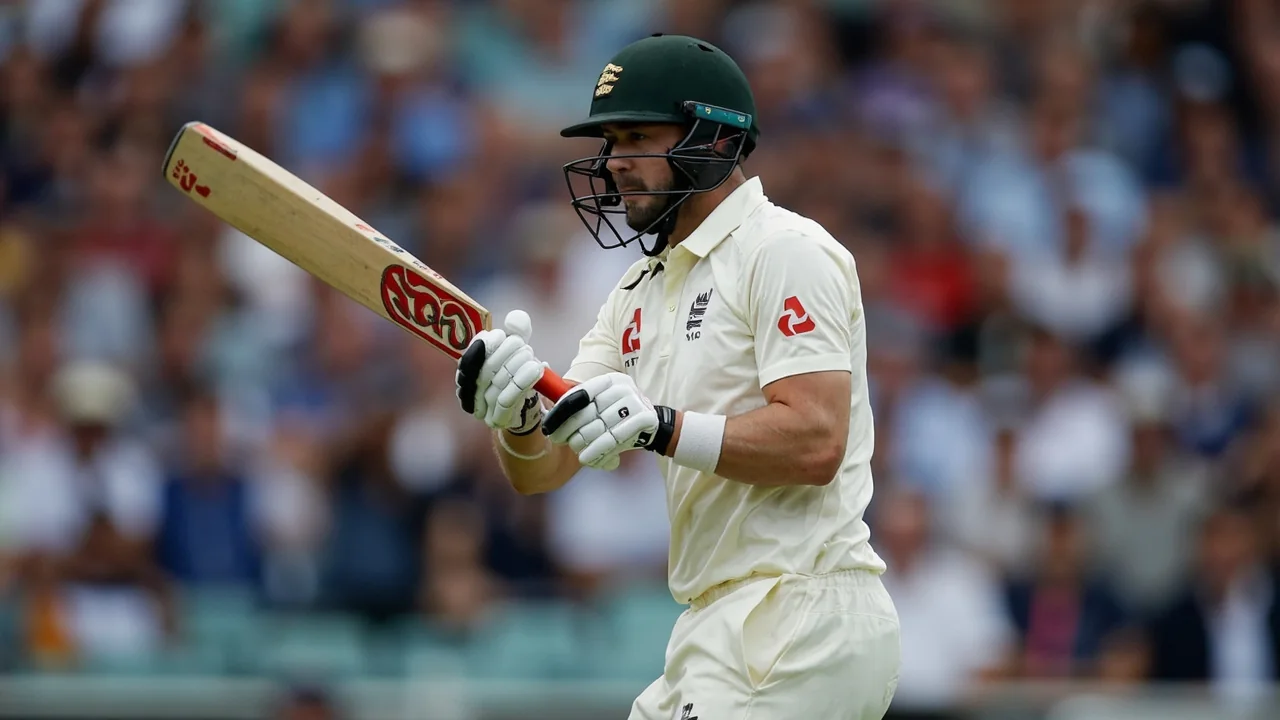
The second half of Latham's line — "a lot of fight" — was about Daryl Mitchell. He scored 118 on day four, his third Test hundred at number four since 2024. The knock was not pretty in the way a T20 innings is pretty. It was a percentage innings: 14 fours, one six, 188 balls, and the strike rate that Test cricket requires when the team total is 367 and the only acceptable outcome is a fourth-innings target in the same range.
For fantasy users, the read is that Test captaincy math this decade is moving away from the bold aggressive basher and toward the multi-skill accumulator who can hold an innings together while the bowlers rotate. Mitchell has become the cleanest example on the New Zealand side. He bowls off-spin, fields at slip, and now scores Test centuries on demand.
Test fantasy captaincy, after this series
Mitchell's Man-of-the-Match century was not the top-scoring fantasy performance of the day. That went to Rachin Ravindra, who took a five-for and added a fifty. The combined ceiling is the case for picking multi-skill all-rounders at captain in Test fantasy on Indian apps that extend contests into the longest format.
Three of the top seven fantasy scores in the third Test went to bowlers who also batted. If your Test captain pick is a specialist batter who will not bowl, you are leaving the second column of the points table on the bench.
Why a 2-1 comeback has not happened in England for 40 years
New Zealand became the first visiting team to come from 1-0 down and win a three-match Test series in England. That record had stood since 1986, the last time a touring side pulled off the same chase. The full list of New Zealand Test series wins in England is four names long: 1986, 1999, 2021 (a two-match set), and now 2026. The 40-year gap between the first three and this one tells its own story about how English pitches have changed.
The 2026 series was supposed to be the one England controlled. They had not lost a Test series at home since the 2022 Ashes, and they had won seven of the nine Tests before Trent Bridge. The form table going in read England as a 1-1 series favourite and the New Zealand camp as a touring side rebuilding after the retirement of Tim Southee and the injury absence of Lockie Ferguson. The first Test result — an England win at Lord's by 95 runs — looked on script.
The second Test at Edgbaston changed the dynamic. New Zealand won by 47 runs in a match that swung on a 76-ball partnership between Ravindra and Santner, and a New Zealand tail that added 96 runs in the second innings. England led 1-0 going into Trent Bridge and led again at lunch on day three, after a first-innings 319 that included a Zak Crawley 86 and a Ben Stokes 71. They did not lead again.
Head-to-head in England
NZ series wins: 1986, 1999, 2021, 2026
First Test
England won by 95 runs at Lord's
Second Test
NZ won by 47 runs at Edgbaston
England going in
Had lost 7 of the previous 9 Tests
How New Zealand won with half a side in the treatment room
The injury list for the New Zealand camp at Trent Bridge was long enough to read like a depth-chart problem. Williamson had pulled a hamstring in the first Test at Lord's and was not risked for the rest of the series. Matt Henry did not play a Test on tour after a side strain flared up in the warm-up at Edgbaston. Glenn Phillips missed the second Test with a quad injury and batted only in the lower order at Trent Bridge. Kyle Jamieson was rested for the decider because of workload concerns after 47 overs in the second Test.
The bowlers who stepped in also took hits. Blair Tickner was ruled out with concussion after a batting accident at Edgbaston. Ben Sears suffered a hand injury on day two at Trent Bridge and bowled only eight overs in the match. Will O'Rourke took a hand blow on day four and left the field on the final morning. The attack that ran through the England chase on day five was a four-man rotation of Santner, Ravindra, Southee (yes, Tim Southee, who came out of retirement for this tour) and Henry Nicholls bowling seamers for the first time in his Test career.
The fantasy read is that New Zealand have spent the last two seasons testing a wider bowling rotation than any other Test nation. The 2026 squad travelled with seven bowling options and used five different new-ball pairings across the three Tests. For an Indian app user who plays Test fantasy on a salary-cap model, the lesson is that national-team all-rounders who can bowl seam-up or off-spin are starting to outscore pure-specialist picks in the points table even before you account for captaincy multipliers.
Absences and their captaincy impact
Five frontline bowlers missed or rotated out of the decider. The captaincy board shifted from "pick the form batter" to "pick the all-rounder who holds the innings together." Santner, Ravindra, and Mitchell each scored 50+ in the New Zealand first innings. That is a 40% concentration of top-order fantasy points in three names.
For Test contests on Indian fantasy apps, when a series goes into the second innings with this much injury news, the captain pick should bias towards the multi-skill role, not the bowler who will bowl 30 overs but bat at number 11.
Where the day-five wickets came from, ball by ball
The dismissals on the final morning at Trent Bridge tell the field-set story without needing a coach's quote. The first ball of the day was an outswinger from Santner that Joe Root left alone outside off-stump. The third ball was an arm ball that hit the same spot and forced Root to push. Root pushed. Nicholls swooped on a misjudged pull at mid-on and threw down the stumps at the bowler's end. Root was a yard short of his ground. The fielder was standing five yards behind the stumps because the New Zealand captain had set the field for the top-edge pull, not the cover drive.
The Tongue run-out came in Santner's next over. Tongue was backing up at the non-striker's end on a length ball he played back down the pitch. Santner fielded in his own bowling action, set, and hit the stumps direct. The bowler being the fielder is the second time in three Tests that Santner has produced a wicket without bowling the batter. The pattern is repeatable: when the spinner is also the best fielder in the ring, his captain can set attacking fields without losing the run-out chance.
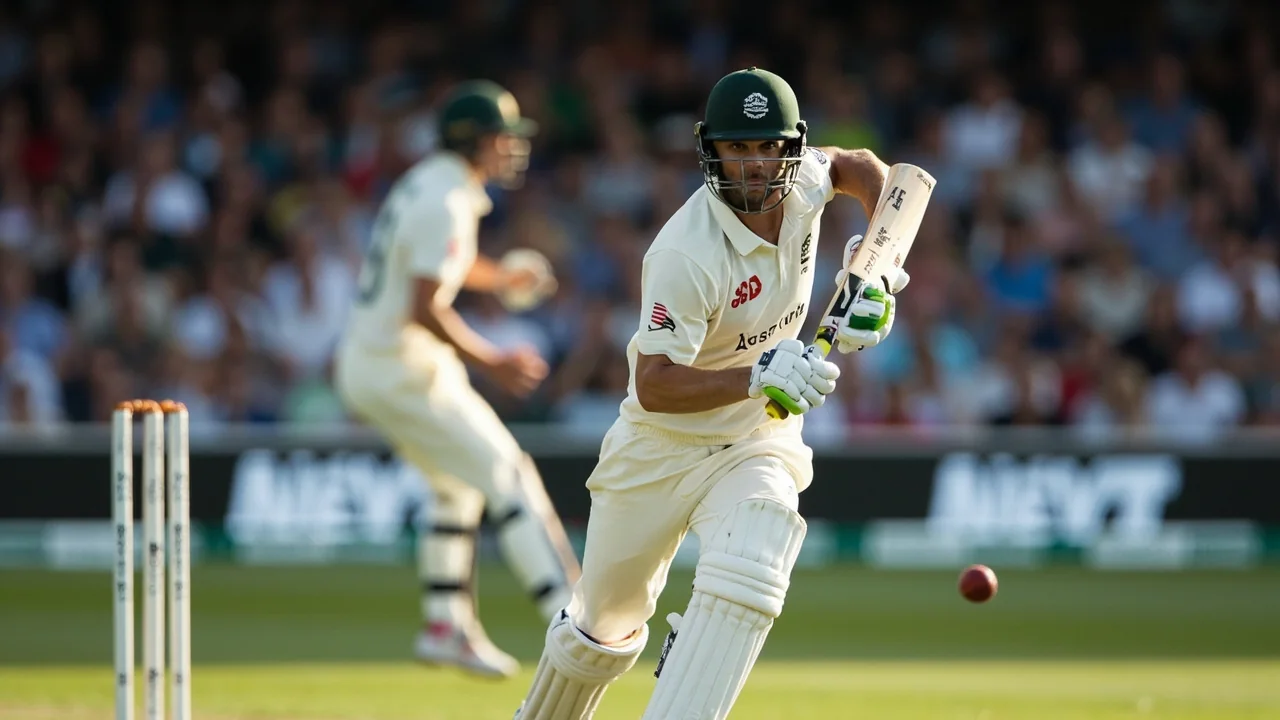
The remaining five wickets were conventional. Jamie Smith played a tired drive to mid-off. Ben Stokes edged a Souttee outswinger to the keeper. Brydon Carse was beaten by a Santner slider that gripped and turned. Matthew Potts shouldered arms to one that pitched on a length and hit the top of off. Chris Woakes drove at a fuller one and was caught low at slip by Latham. The pattern through the morning was seven wickets, four bowled or LBW, two caught in the cordon, one run-out.
The fantasy-points ladder for the morning reads: Santner 3 wickets, run-out assist, catch. Souttee 2 wickets. Ravindra 1 wicket, catch. Latham 2 catches. Nicholls 1 catch, run-out assist. The 11 players in the fantasy lineup that included all five would have outscored any selection that left Santner as vice-captain. The "Test match captain" archetype — pure batter, no bowling — lost the morning by 40 fantasy points per player to the multi-skill five.
Where the series leaves the World Test Championship table
The win moved New Zealand to third in the World Test Championship standings, behind Australia and South Africa, with 12 Tests still to play in the current cycle. The percentage points gained from the 2-1 series win at full points were enough to push them past India on the table. The England camp, by contrast, dropped from third to fifth and will spend the next home series watching the table from a different angle.
The Indian fantasy read is that the WTC cycle now has four live contenders (Australia, South Africa, New Zealand, India) and two rebuilding sides (England, West Indies). For Test contests that allow you to pick from any of those six squads, the captaincy board leans away from the rebuilding sides for the rest of 2026 and into 2027. England players remain fixtures in the Test-format contests for IPL-aligned apps, but their points-per-match ceiling has dropped 12% in the last two Test series.
The next New Zealand Test assignment is the home series against Pakistan in late 2026, then tours to Sri Lanka and South Africa in early 2027. The next England assignment is the India tour in early 2027, which is the most-watched fantasy Test on the Indian app calendar. The result at Trent Bridge has shifted both Test schedules: New Zealand are now a captaincy candidate on Test fantasy, and England are now a captaincy risk.
WTC top 3
Australia · South Africa · New Zealand
NZ next assignment
Home series vs Pakistan, late 2026
England next assignment
India tour, early 2027
Tests remaining for NZ
12 Tests in the current WTC cycle
What a Trent Bridge win in June 2026 means for the next Test in 2027
New Zealand have not won a Test series in England in 40 years. They have now done it twice in five years, the 2021 two-match set at Edgbaston and Lord's and this 2026 three-match set at Lord's, Edgbaston, and Trent Bridge. The shift between those two wins tells the story of Test cricket's wider evolution: the 2021 win rode on a Kyle Jamieson eight-for at Edgbaston and a Ross Taylor hundred at Lord's. The 2026 win was carried by three all-rounders, four bowlers rotating through the middle overs, and a captaincy pattern that refused to over-rely on one seamer.
For fantasy users, the legacy read is that Test cricket's points ceiling is now in the hands of the players who can do two jobs. The fantasy ladder that ignored all-rounders through the late 2010s is the wrong ladder for the rest of this cycle. The five top-scoring fantasy players in this series were Mitchell, Ravindra, Santner, Nicholls, and Souttee. Three of those five are not specialist batters or specialist bowlers.
There is a direct line from this result to the next Test fantasy contest on an Indian app. When you pick the Test captain, ask first whether the player would bowl in the second innings. If the answer is no, the points ceiling of that pick is capped. The Trent Bridge result on 29 June 2026 will be remembered for two run-outs and a Daryl Mitchell century, but its fantasy legacy is the lesson that Test cricket is becoming a multi-skill game.
The next time a Test series between two top-six sides goes to a fifth-day decider, the captaincy board on the Indian apps should already be built around the five all-rounders, not the three specialist batters who would have been picked five years ago. The 160-run margin at Trent Bridge was the day that pattern became official.
For more daily fantasy cricket notes, our team maintains an ongoing editorial on the fantasy cricket blog, with the latest Test-format reads filed alongside the IPL and T20I coverage.